
Service
Mobile Advertising Services For Measurable Local Visibility And Consistent Lead Generation
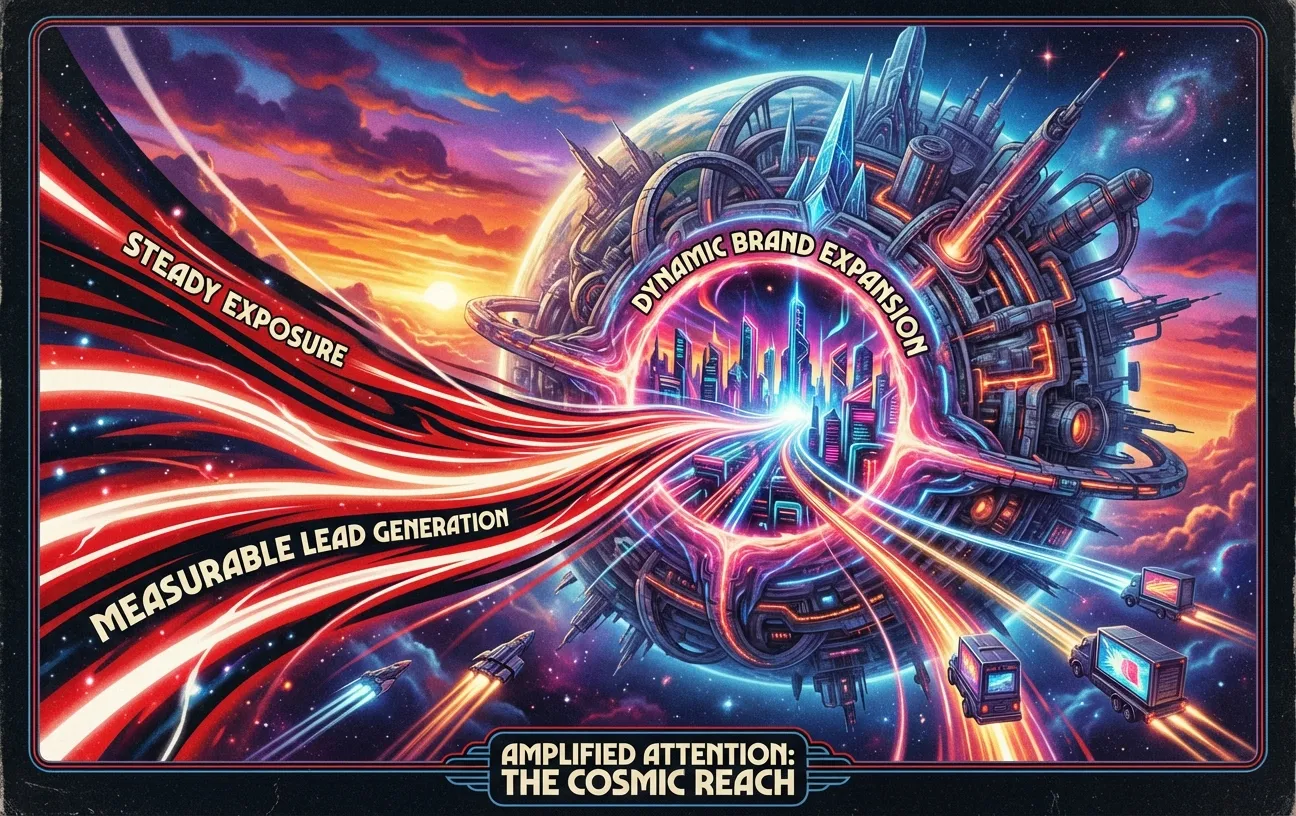
Mobile advertising services put your brand in front of real people where they already spend time, instead of waiting for them to find you online. For many local businesses, service pages struggle to rank and paid ads get more expensive every month. Some see website traffic but very few calls. Others rely heavily on search results that fluctuate without warning. Rolling billboards create steady visibility in high traffic areas, keeping your name in front of potential customers during commutes, events, and peak shopping hours. That repeated exposure often turns into direct searches, phone inquiries, and measurable revenue opportunities.
In practice, performance depends on route planning, impression tracking, and how well campaigns align with your broader marketing data. We often review search visibility reports alongside offline campaign timelines to see how branded search volume shifts after trucks run in specific areas. Crawl diagnostics and performance dashboards help confirm whether increased searches are converting on properly optimized pages. This becomes critical for businesses expanding into multiple locations, where consistent messaging and landing page structure must support rising demand without technical friction.
RockN' Socials approaches campaigns with structured technical audits and data-driven ranking analysis to connect offline visibility with online conversion paths. We provide clear documentation through search visibility reports so local service businesses can see how exposure translates into measurable engagement. On this page, you will see how our process turns mobile visibility into consistent lead generation backed by real performance tracking.
What You Get
When you invest in Truck/mobile Billboards, you receive a structured campaign plan, professionally designed creative, and coordinated placement across targeted routes. Every part of the campaign is documented so you can see where your ads run, how long they run, and what areas they cover.
Deliverables
Mobile billboard design files created in Adobe Photoshop, including print-ready artwork sized to truck specifications, with layout previews for approval
Creative mockup document showing how your ad will appear on each side of the truck for final sign-off
Placement strategy document outlining target neighborhoods, high-traffic corridors, event zones, and recommended run times
Route plan schedule developed with route optimization tools, including mapped coverage areas and daily drive windows
Campaign coordination checklist covering print production, truck booking, driver scheduling, and launch timeline
Launch confirmation summary detailing start date, route activation, and deployment schedule
Campaign-level performance report summarizing active routes, hours driven, estimated impressions based on traffic patterns, and any route adjustments
Monthly summary report outlining total campaign duration, coverage zones, scheduling updates, and recommendations for future placements
Each deliverable is provided as a shareable document or PDF so your team can review, reference, and store campaign records.
Tools and Access
Campaign planning and communication are managed inside the RockN' Socials CRM. This system tracks approvals, route schedules, artwork status, and reporting timelines.
Design production is completed using Adobe Photoshop and Adobe Premiere when video mockups are required for review. Media placement networks are used to secure available trucks and confirm run dates. Route optimization tools help map efficient driving paths across your selected areas.
To begin, we require access to your brand assets, including logos, color guidelines, and messaging standards. We also need a clear list of target locations and campaign goals so routes and placements can be aligned with your objectives.
What You’ll Be Able to Review
You will receive creative proofs before printing begins. These include full-scale visual mockups of the truck wrap for written approval.
You will be able to review the placement strategy document, which outlines targeted streets, commercial zones, or event areas. The route plan schedule shows daily operating windows and mapped coverage.
During the campaign, you can review campaign-level reports and monthly summaries. These reports provide documentation of run dates, geographic coverage, and scheduling adjustments. All records are stored within the CRM for ongoing access.
What We Need From You to Start
To launch your campaign, we need:
Brand assets including logos, approved taglines, and visual guidelines
Target locations such as neighborhoods, business districts, or event venues
Campaign goals such as awareness, grand opening promotion, or event visibility
Approval contact for artwork and route sign-off
Clear direction at the start allows us to design the creative, secure truck availability, and schedule routes without delays.

How We Evaluate and Improve Performance
Performance improvements are based on structured analysis, not assumptions. We evaluate every truck campaign using measurable data, documented observations, and defined decision criteria before making changes.
Data Sources We Analyze
To evaluate our mobile advertising services, we review both operational and engagement data across multiple systems.
From the RockN' Socials CRM, we analyze campaign timelines, booking details, target locations, and client objectives. This helps us confirm that execution aligns with the original placement strategy.
Using route optimization tools, we review GPS logs and route adherence reports. We compare planned routes to actual travel paths to confirm coverage in priority zones such as retail corridors, event areas, or high traffic intersections.
Through media placement networks, we assess inventory scheduling, display frequency, and geographic saturation. This helps identify whether certain areas are overserved or underserved.
Our design tools, including Adobe Photoshop and Adobe Premiere, are used to review creative assets for visibility, readability, and clarity at driving speeds. We evaluate font size, contrast, image sharpness, and message hierarchy to ensure the design performs in real street conditions.
We combine these data points with campaign-level reporting and monthly summaries to understand performance patterns over time.
Example Findings We Often Identify
During evaluation, we frequently uncover issues that are not obvious at launch.
Common findings include:
Routes that technically meet mileage goals but miss high dwell time areas.
Designs that look strong on a desktop screen but lose readability at distance.
Messaging that lacks a clear call to action when viewed for only a few seconds.
Placement schedules that do not align with peak traffic times for the target audience.
Event-based campaigns where truck timing does not match crowd flow patterns.
Each issue is documented in a structured report. We categorize findings under creative, routing, scheduling, or coordination. This organization allows us to identify root causes instead of making surface-level changes.
Example Analysis Scenario
A common scenario involves strong route coverage but limited response activity. In this case, we compare GPS route logs with traffic density data to confirm that trucks are operating in high exposure zones.
If route coverage is confirmed, we then evaluate the creative. Using design review standards, we assess whether the message can be understood within three to five seconds. We also review contrast levels and text size relative to truck dimensions.
If both routing and creative meet standards, we analyze timing. We may find that trucks operated during lower traffic hours rather than peak commuter windows. Only after comparing these sources do we recommend adjusting schedule, design, or route.
This layered analysis prevents incorrect assumptions about what is actually causing underperformance.
Real Tool Workflow
Our workflow connects multiple systems to validate findings.
The RockN' Socials CRM tracks campaign objectives and scheduling commitments. Route optimization tools confirm physical delivery and geographic coverage. Media placement networks verify booking accuracy and exposure windows.
Creative files built in Adobe Photoshop and Adobe Premiere are reviewed against field photography to confirm real-world visibility. If needed, we revise layouts directly in those tools to test improved readability.
By cross-checking route data, scheduling records, and creative execution, we avoid making decisions based on a single metric. Each tool provides a different signal, and together they create a complete performance picture.
How Improvements Are Prioritized
Once findings are documented, we rank improvements using a simple framework:
Expected impact on visibility or message clarity.
Ease and speed of implementation.
Alignment with campaign goals and target areas.
Dependencies such as reprinting or rescheduling.
High-impact changes that require minimal operational disruption are addressed first. More complex adjustments, such as full creative redesigns or major route changes, are scheduled strategically.
This prioritization ensures that improvements are practical, measurable, and aligned with business objectives rather than reactive adjustments.
Who This Is For
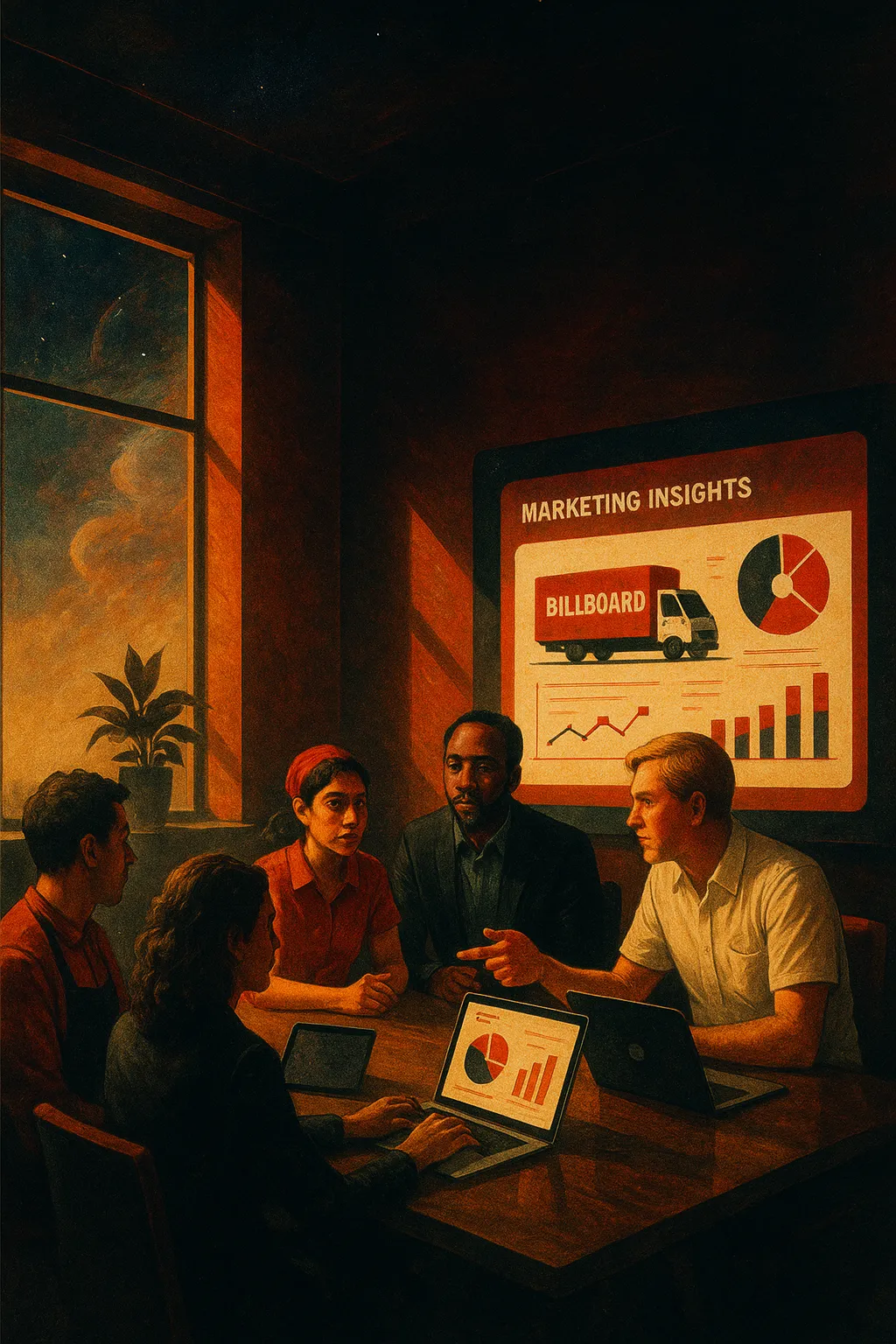
This service is designed for businesses that want measurable visibility in specific local areas and consistent brand exposure in front of real people. It works best for companies that need to reach customers where they live, shop, commute, or attend events.
Good Fit
Mobile billboard campaigns are often a strong fit for:
Local businesses that depend on foot traffic or nearby customers, such as restaurants, gyms, retail stores, or service providers.
Event promoters who need to build awareness before a launch, grand opening, festival, or limited-time promotion.
Brands entering a new market that want to create fast local recognition across high-traffic corridors.
Companies targeting specific neighborhoods or districts where their ideal customers are concentrated.
Businesses with seasonal promotions that need repeated exposure over a defined time period.
These organizations typically benefit from repeated impressions in the same areas, which helps build familiarity and recall.
Common Starting Situations
Many clients begin with challenges such as:
Strong products or services but low visibility in busy local areas.
Heavy reliance on social media or paid ads without enough physical presence in the community.
Event promotions that lack awareness outside their existing audience.
New locations that need attention beyond standard signage.
Inconsistent foot traffic due to limited neighborhood exposure.
In these cases, rolling advertising helps bring the message directly to high-traffic streets instead of waiting for customers to discover the business.
Not a Fit
This service may not be ideal for:
Businesses expecting immediate sales from a few days of exposure.
Companies targeting a fully national or online-only audience.
Organizations without a clear local service area.
Businesses unwilling to adjust creative messaging for street-level visibility.
Mobile billboard campaigns work best when there is a defined geographic focus and a clear, simple message designed for quick viewing.
Our Process
Strong results with truck and rolling ads come from a clear plan and consistent execution, not random changes. Our process is built to make sure your message is easy to read, runs in the right places, and stays consistent from the first draft through final reporting.
Step 1: Initial Assessment
We start by learning what you are promoting and what a “win” looks like for your business. This includes your offer, service area, and any dates that matter (like an event, seasonal rush, or store opening).
Next, we review your current digital presence to see what people will find after they see the truck. We check your website or landing page for basic clarity: the main headline, what you want visitors to do, how easy it is to contact you, and whether the page makes sense on a phone. If you’re using tracking links or call tracking, we confirm what is already in place so we can plan around it.
This step matters because outdoor ads create attention fast. Your online experience needs to support that attention instead of wasting it.
Step 2: Strategic Planning
Using what we learned, we map out a campaign approach that matches your goal. We decide what the ad must communicate in a few seconds (brand name, offer, location, and next step). We also plan where and when the message should appear based on the audiences you want to reach.
We set practical guidelines for readability, such as how many words to use, how large key text needs to be, and what type of image will be clear at street speed. If you have multiple services or locations, we prioritize the one message that is most likely to drive action during the run.
This step matters because truck-based ads have limited time to make an impression. A focused message and a clear plan reduce confusion and improve recall.
Step 3: Implementation
Once the plan is approved, we move into execution. We create the ad layout, confirm that the design matches your brand standards, and prepare production-ready files. We also handle coordination details so timing stays on track, including aligning design approval with print timelines and truck availability.
If your campaign includes a specific URL, phone number, or QR code, we verify it works and leads to the right place. We also confirm that your destination page matches the ad message, so people don’t land on a page that feels unrelated.
This step matters because small production mistakes (bad contrast, hard-to-read text, wrong link) can limit results even if the route is strong.
Step 4: Monitoring and Measurement
After launch, we track what ran and when it ran. We review deployment details, check that the schedule is being followed, and document coverage based on planned activity.
On the digital side, we look for signs of lift that match the campaign goal, such as increases in visits to a specific page, form fills, calls, or direction requests if those actions are being tracked. For mobile advertising services, measurement is most useful when expectations are set early and the tracking setup is clean.
This step matters because you need proof of execution and a clear way to judge impact.
Step 5: Continuous Refinement
As the campaign runs, we use what we observe to make practical adjustments. That may include tightening the message, improving contrast for readability, shifting emphasis to a stronger offer, or adjusting timing to better match local activity patterns.
We also capture lessons for future runs, such as which neighborhoods produced stronger response and which creative elements were easier to remember. Over time, these improvements compound, making each campaign easier to execute and more consistent in performance.
Pricing
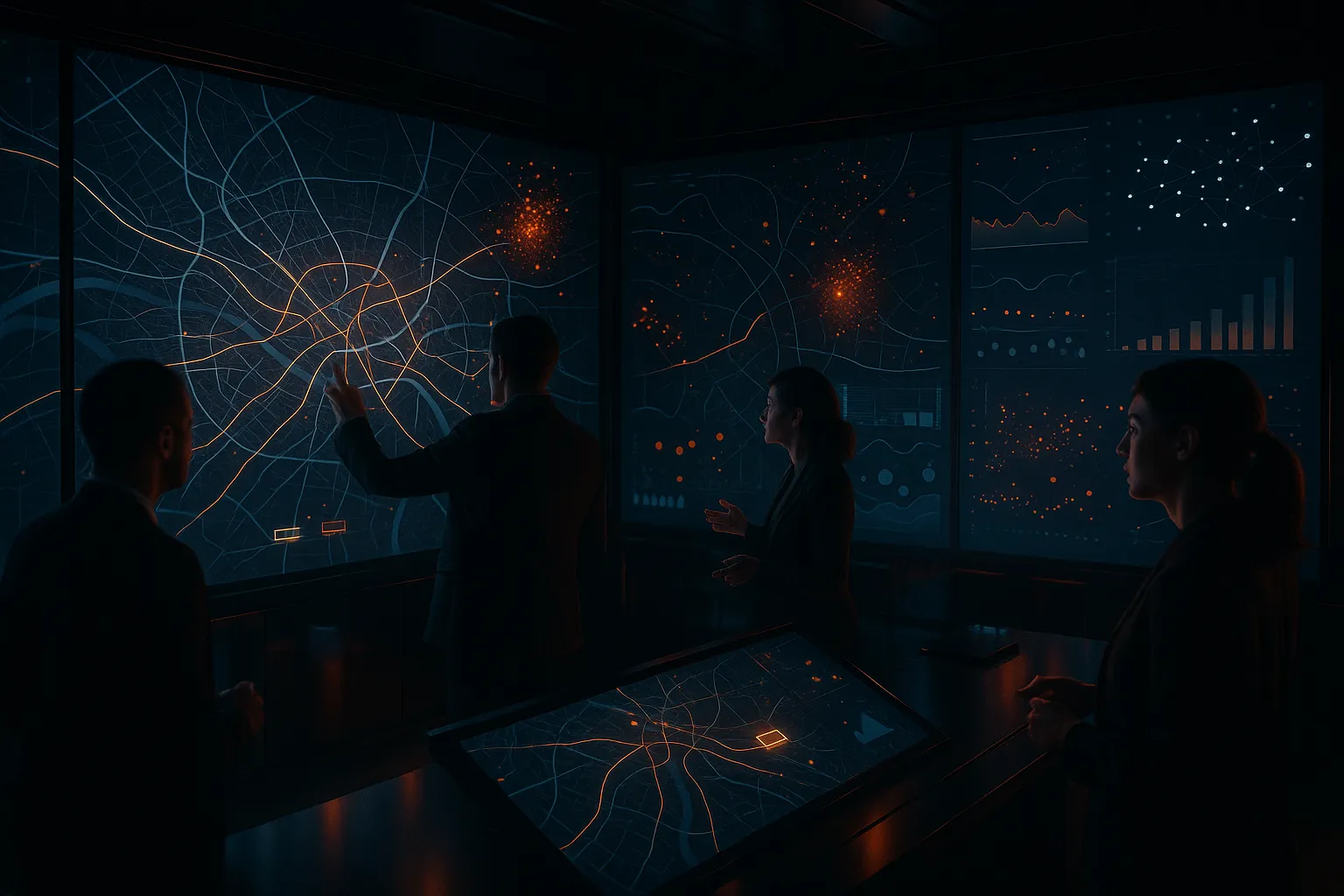
Pricing varies based on the project scope, technical needs, and the goals of the business. Each program is quoted to match the area coverage, creative work, and schedule required.
Projects typically start around Get Quote — suitable for small, local campaigns or a single-route placement with basic design and short runs.
Most businesses invest between Get Quote — common for recurring rotations in high-traffic zones, multi-route coverage, and professional artwork or vehicle wraps.
Larger or more complex implementations may range Get Quote — applies to multi-unit programs, long-term saturation strategies, custom production, and coordinated timing across multiple markets.
Common factors that influence final pricing include:
size of the website — larger sites often need more coordination for tracking, landing pages, or linked promotions.
number of pages or services involved — more pages or offerings require additional creative assets and campaign setup.
technical complexity — integration with digital tracking, custom landing pages, or third-party tools raises effort and cost.
competitiveness of the market — higher-competition areas may require more vehicles, longer schedules, or targeted routing to achieve visibility.
level of ongoing support required — recurring updates, creative refreshes, and reporting add to ongoing investment.
current condition of the website — if the site needs updates or improved conversion paths, extra work will be required to capture traffic from the campaign.
Most projects start with a consultation or site review to define the right scope. That step ensures businesses invest only in the services and improvements that match their goals and deliver practical value.
Next Step
The next step is a consultation to understand your business goals and current situation. This conversation helps us clearly learn what matters most to your operations and where you want to focus.
The discussion clarifies priorities, scope, timeline, and the level of work needed. It also lets us align expectations and discuss any constraints you are facing.
The goal is to identify practical opportunities that match your objectives and resources. It also helps determine whether the service is a good fit for your needs.
If you would like to explore the service further, you can schedule a consultation.