
Service
Engaging Videos For Social Media That Increase Qualified Leads And Conversions
Engaging videos for social media help businesses capture attention quickly and turn passive viewers into qualified leads. We have worked with companies that relied heavily on paid ads but saw rising costs and inconsistent inquiries because their creative failed to hold attention in the first three seconds. Others had strong service pages but struggled to convert traffic into calls or form submissions because their messaging lacked visual proof and personality. Short form video fills that gap by showing real expertise, real people, and real results in a format platforms actively push to new audiences.
In practice, performance often stalls due to weak content planning, unclear messaging, and poor alignment between video topics and actual search demand. We see brands producing content without reviewing keyword targeting, content gaps, or how videos support existing landing pages. For companies managing dozens of service pages, video must support site architecture and internal linking so traffic flows toward high intent offers instead of isolated posts. Without that structure, views increase but conversions do not.
At RockN' Socials, we use structured optimization roadmaps to plan, script, and film content tied directly to measurable goals. Our team reviews SEO performance dashboards and search visibility reports to identify where video can support underperforming pages or high value keywords. We commonly work with local service businesses and growing companies relying on inbound leads. Below, you will see how our filming process is built to drive attention, engagement, and measurable conversions.
What You Get
You receive professionally filmed short-form videos that are ready to post on your social platforms. Each project results in clear, structured video assets that match your brand, goals, and distribution plan.
Deliverables
Video filming session at your location using professional camera equipment, including lighting and audio setup suited for indoor or outdoor environments
Shot list document outlining planned scenes, talking points, and visual angles to keep filming organized and aligned with your content goals
Raw video footage files delivered after the session for your internal archive and future repurposing
Short-form content production formatted for vertical platforms such as Instagram Reels, TikTok, YouTube Shorts, and Facebook Reels
Basic editing including clip trimming, audio leveling, caption overlays, simple transitions, and brand logo placement
Platform-ready formatting with correct aspect ratio, resolution, and export settings for each intended platform
Caption and posting notes document with suggested hooks, captions, and call-to-action guidance for publishing
Project summary report outlining completed videos, runtime, format types, and publishing recommendations
Monthly performance summary if service is ongoing, reviewing published content and identifying adjustments for future filming sessions
Each deliverable is designed to give you usable content, organized files, and clear direction for publishing and promotion.
Tools and Access
Filming is completed using professional camera equipment, lighting kits, and audio microphones to ensure clean visuals and clear sound.
All project coordination is managed through the RockN' Socials CRM, where filming schedules, approvals, and deliverables are organized. Editing software is used for cutting, formatting, and exporting content. Content optimization tools are used to prepare captions, format videos correctly for each platform, and align content with platform best practices.
To begin, we need access to the filming location during scheduled hours. We also require a clear brand direction document or brand assets such as logos, colors, and fonts. If you are running ads, access to your ad account may be requested to ensure video format and duration match campaign requirements.
What You’ll Be Able to Review
You will be able to review the shot list before filming to confirm messaging and priorities.
After filming, you will receive draft videos for approval before final export. This allows you to request small edits such as caption adjustments, clip swaps, or branding changes.
For ongoing engagements, you will receive a monthly performance summary that outlines which videos were published, where they were posted, and how they performed based on platform metrics. This gives you visibility into what types of content to film next.
All final video files are delivered in downloadable format so you can store, reuse, or repurpose them for email marketing, ads, or website placement.
What We Need From You to Start
To begin, we need:
Access to your filming location
A clear outline of your content goals such as brand awareness, product promotion, or ad creative
Brand assets including logo files, brand colors, and approved messaging
A point of contact for scheduling and approvals
Clear communication at the start helps structure the filming session, avoid reshoots, and ensure the finished videos match your business objectives.
How We Evaluate and Improve Performance
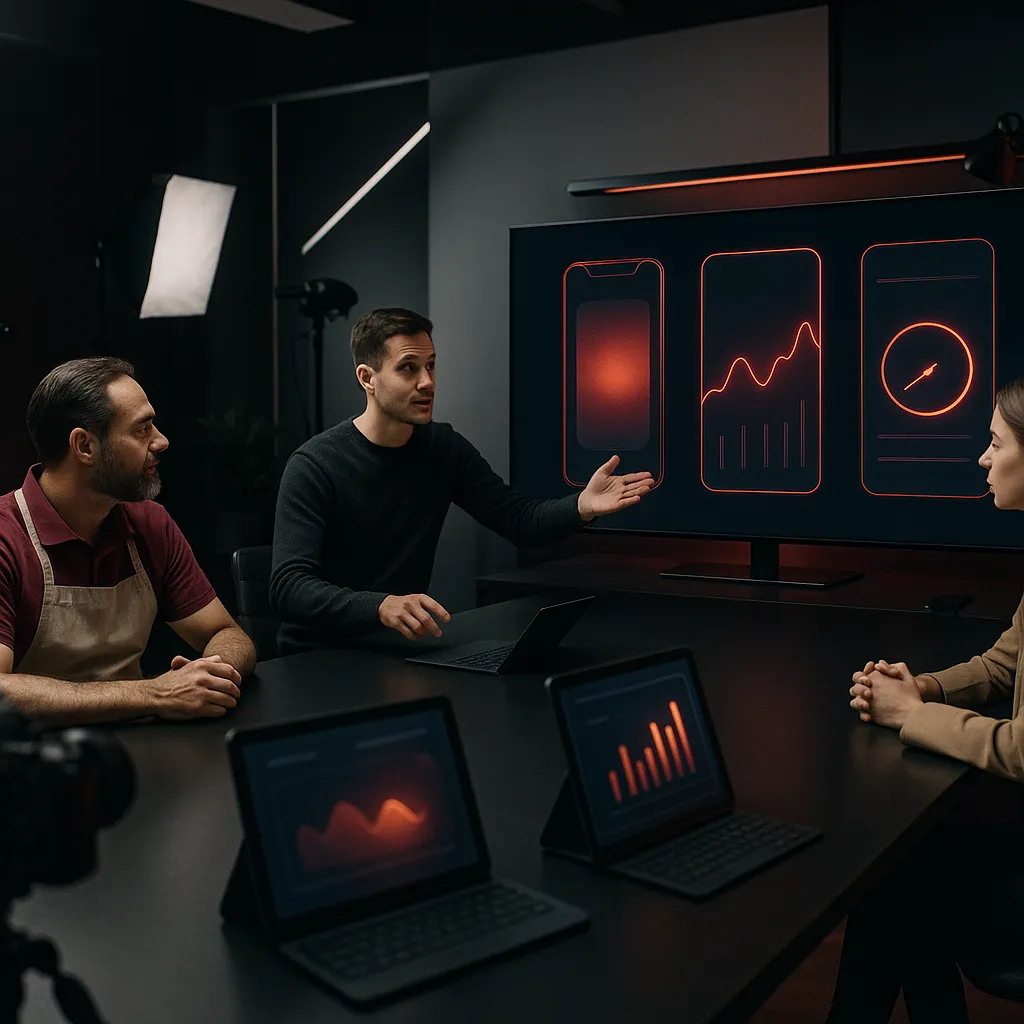
Improving video performance starts with structured analysis, not assumptions. Every recommendation is based on measurable data pulled from multiple systems and reviewed against clear performance benchmarks.
Data Sources We Analyze
When evaluating engaging videos for social media, we look at both production quality signals and platform performance data.
From platform analytics dashboards, we review:
Watch time and average view duration
Completion rates
Audience retention curves
Click-through behavior
Saves, shares, and comment patterns
These metrics help us understand where viewers lose interest, what holds attention, and which calls to action generate response.
Inside RockN' Socials CRM, we connect video engagement data with downstream actions such as form submissions, booked calls, or purchases when applicable. This shows whether a video is driving business outcomes, not just views.
We also review footage quality using professional camera equipment benchmarks. This includes lighting balance, framing consistency, audio clarity, and scene pacing. Editing software timelines allow us to inspect cut frequency, hook timing, and visual transitions. Content optimization tools help verify that aspect ratios, captions, and formatting align with each platform’s technical requirements.
Each data point serves a purpose. Engagement metrics show audience interest. Technical review shows production quality. CRM tracking shows business impact.
Example Findings We Often Identify
During analysis, we often identify patterns such as:
Strong initial views but sharp drop-off within the first three seconds
Clear visuals but weak on-screen hooks
Inconsistent framing across clips within the same series
Videos formatted correctly but lacking captions, reducing retention
High engagement but no clear call to action
We document these findings in structured reports, separating technical production issues from messaging or positioning gaps. This prevents misdiagnosing a content issue as a filming problem, or vice versa.
Resolving these issues improves both audience retention and alignment with business goals.
Example Analysis Scenario
A common scenario involves strong reach but low average watch time. In this case, we compare audience retention graphs with the editing timeline.
If viewers drop off before the main message appears, we examine the opening three seconds. We review hook clarity, visual movement, and whether the first frame communicates value immediately.
We then cross-check comments and engagement behavior. If comments show confusion, the issue may be messaging. If there is no engagement at all, pacing or visual structure may be the cause.
By comparing platform analytics, editing structure, and CRM activity together, we determine the root cause before recommending changes.
Real Tool Workflow
Our evaluation process combines multiple systems to avoid incomplete conclusions.
RockN' Socials CRM connects engagement signals to actual business actions. Professional camera equipment standards ensure visual and audio quality meet production requirements. Editing software allows frame-by-frame inspection of pacing and structure. Content optimization tools confirm formatting, captioning, and technical compliance for each platform.
No single tool provides the full picture. Performance metrics without production review can mislead. Production review without engagement data lacks context. Combining these systems creates reliable insight.
How Improvements Are Prioritized
We rank improvements based on:
Expected impact on retention or conversions
Alignment with business goals
Implementation complexity
Dependency on reshoots or re-editing
Quick adjustments, such as restructuring hooks or adding captions, are often addressed first. Larger production changes are scheduled strategically to maximize return on filming time.
This structured prioritization ensures that improvements are practical, measurable, and aligned with long-term content performance.
Who This Is For
This service is designed for businesses that want measurable improvement in their online visibility and customer acquisition through video. It fits companies that treat content as a real growth channel, not just something to post occasionally. If you want your videos to drive inquiries, sales, or booked calls — not just views — this service is built for you.
Good Fit
This filming service works well for:
Local businesses competing in crowded markets that need to stand out quickly on social platforms.
Personal brands building authority and consistency through regular reels, Shorts, or TikTok content.
Content-driven companies that publish weekly educational or promotional videos and need professional production quality.
Businesses running paid ads that require high-performing creative designed to capture attention in the first few seconds.
Companies relying on inbound leads that want video to support bookings, consultations, or purchases.
It is especially valuable for businesses that plan to produce content consistently rather than as a one-time project.
Common Starting Situations
Many clients come to us when:
Their videos look inconsistent or unprofessional.
They post regularly but engagement and inquiries remain low.
They are running ads but the creative is not converting.
Their team records content in-house but struggles with lighting, audio, or framing.
They have strong offers but weak on-camera presentation or unclear messaging.
In these cases, structured filming and production standards help create clarity, consistency, and stronger audience response.
Not a Fit
This service may not be right for:
Businesses expecting viral results within a few weeks.
Companies unwilling to appear on camera or provide a spokesperson.
Organizations looking for a single video with no long-term content plan.
Businesses without the ability to implement or publish content consistently.
Professional filming supports growth, but it works best when paired with clear goals and ongoing execution.
Our Process
Strong short-form content is not made by guessing what might work. The best results come from a clear process that connects your business goals to what happens on camera, how the videos are edited, and how performance is reviewed. This workflow keeps filming efficient and helps you produce engaging videos for social media that feel natural and intentional.
Step 1: Initial Assessment
We start by reviewing your current digital presence to understand what you already have and what is missing. This includes looking at your social profiles, recent posts, and any active ad creative if applicable. We note patterns like which topics you repeat, what offers you highlight, and how your brand appears on screen.
We also check practical details that affect filming, such as your location setup, available space, lighting challenges, background noise, and who will be on camera. This step matters because it sets realistic expectations for what can be captured in a session and what needs to be planned ahead.
Step 2: Strategic Planning
Next, we turn what we learned into a clear plan for the shoot. We align on the goal for the videos (for example: build trust, explain a service, promote a product, or support a paid campaign). Then we outline the video types that fit that goal, such as talking-to-camera clips, demonstrations, behind-the-scenes moments, or customer-focused scenarios.
We also define the structure that makes short-form work: the first seconds, the main point, and the close. Planning this upfront keeps filming focused, reduces wasted takes, and ensures each scene has a purpose.
Step 3: Implementation
This is the filming and production phase. On-site, we set up camera, lighting, and audio based on the environment. We then capture footage in an organized order so you are not constantly switching locations, props, or people. We guide pacing, framing, and delivery so the content feels clear and confident without sounding scripted.
After filming, we move into editing. We select the strongest takes, tighten the pacing, and build clean cuts that match the platform style. We also make sure the final videos fit the right dimensions and length for where they will be posted. Implementation matters because strong ideas only work if the footage is clear, the message is easy to follow, and the finished videos are simple to publish.
Step 4: Monitoring and Measurement
Once the videos are posted or used in campaigns, we track performance signals that show how viewers respond. This often includes views, watch time, replays, completion rate, clicks, and saves or shares where available. We compare results across different hooks, topics, and formats to see what is driving attention and what is losing it.
This step matters because it helps separate opinions from evidence, so future filming decisions are based on real viewer behavior.
Step 5: Continuous Refinement
We use what we learn to improve the next round. That may mean changing the opening line, shortening the setup, adding clearer context, or filming more variations of the same core message. We also refine how often certain topics appear and which on-camera styles perform best for your audience.
Over time, this creates a repeatable system: plan with purpose, film efficiently, publish consistently, measure accurately, and adjust based on results.
Pricing
Pricing varies based on the scope of work, technical complexity, and the specific needs of your business. Final cost reflects the length and number of shoots, crew and equipment needs, editing requirements, and any location or licensing fees.
Projects typically start around Get Quote — suitable for a single-day shoot with a small crew and minimal edits, often a fit for solo entrepreneurs or very small teams.
Most businesses invest between Get Quote — applies to ongoing content packages, multi-day shoots, or projects that require a dedicated editor and more post-production time.
Larger or more complex implementations may range Get Quote — for regional campaigns, multi-location shoots, extensive scripting or talent coordination, and projects that require custom motion work or high-end equipment.
Common factors that influence pricing include:
size of the website — larger sites often need more content coordination and varied asset sizes for different pages.
number of pages or services involved — more pages or service lines usually means more deliverables and tailored clips.
technical complexity — needs like green-screen, multi-camera setups, or intricate edits raise costs.
competitiveness of the market — higher-competition industries often require more polish and testing to stand out.
level of ongoing support required — retainer-style editing, monthly content refreshes, or rapid turnaround increase the investment.
current condition of the website — older sites may need additional formatting or optimization work to use new assets effectively.
Most projects start with a consultation or a review of existing materials so we can define the right scope and prioritize the work that will deliver measurable value for your business.
Next Step
The next step is a consultation to learn about your business goals and current situation. This conversation is focused on understanding where you are now and what you want to achieve.
During the consultation we will clarify priorities, scope, timeline, and the level of work required. That helps make the conversation efficient and focused on the items that matter most.
The purpose of the conversation is to identify practical opportunities and to determine whether the service is a good fit. This keeps the discussion grounded in realistic options that suit your needs.
If you would like to explore the service further, you can schedule a consultation.