
Service
FIY Content Strategy (Film It Yourself) for Consistent Lead Generation and Higher Conversions

FIY Content Strategy (Film It Yourself) for Consistent Lead Generation and Higher Conversions helps businesses create structured video content that drives measurable inquiries instead of random engagement. Many companies post consistently but see little return because their videos lack clear hooks, direction, or alignment with buyer intent. We often see businesses relying heavily on paid ads while their organic content fails to generate qualified leads. Others get views but no calls because their messaging does not guide viewers toward action. A structured filming plan turns scattered ideas into content that supports visibility, trust, and revenue opportunities.
In practice, most performance issues come from weak planning rather than poor filming. Businesses produce content without mapping it to service priorities, keyword targeting, or conversion paths. Companies managing dozens of service pages often struggle to align video topics with real search demand and existing content gaps. Without a clear structure, internal linking opportunities, content sequencing, and audience retention signals are missed. Over time, this leads to inconsistent messaging and underperforming traffic.
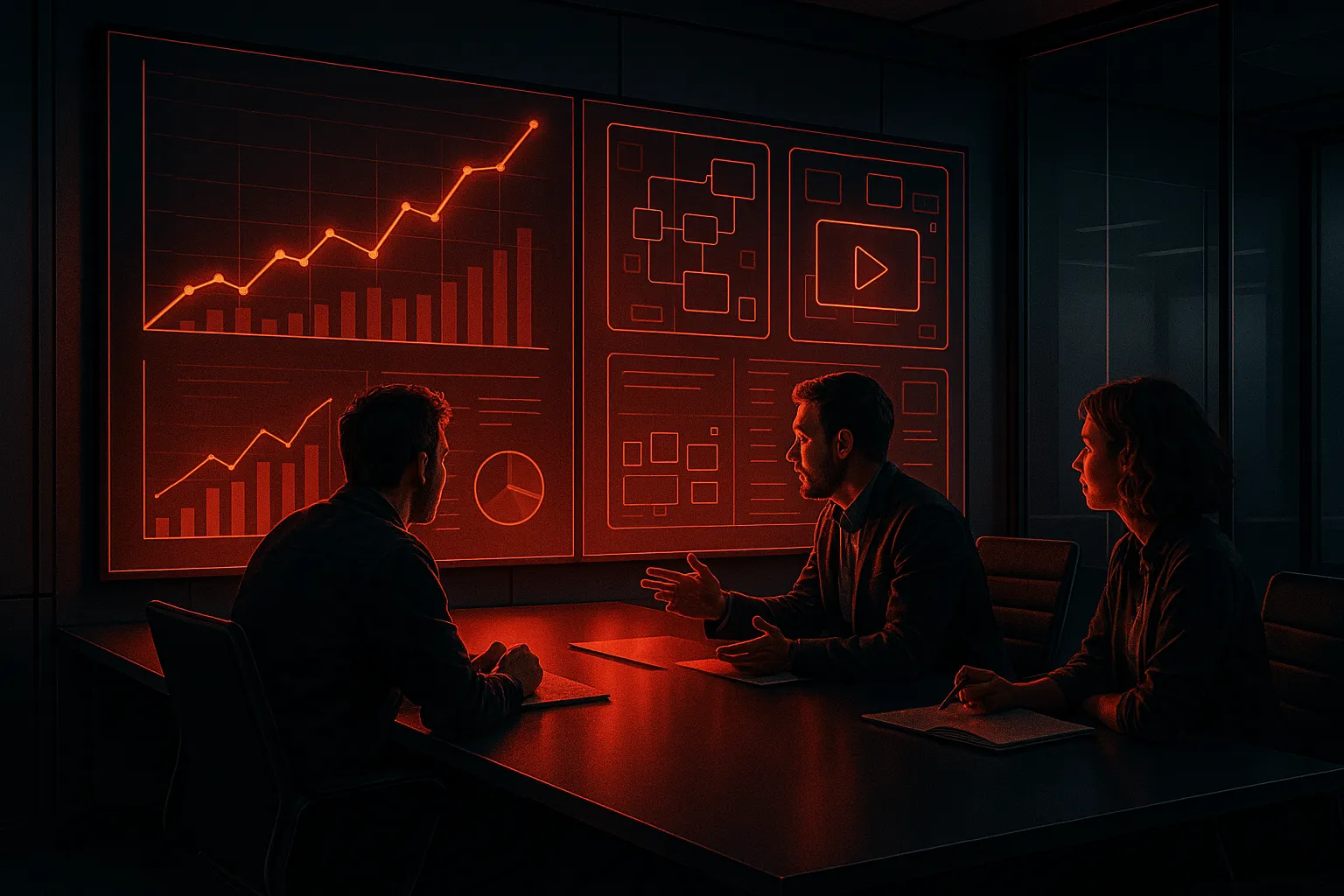
RockN' Socials builds structured optimization roadmaps that translate marketing goals into practical filming blueprints. We support decisions with SEO performance dashboards that show how content connects to search visibility and lead behavior. Our work is built for local service businesses and growing companies relying on inbound leads. Below, you will see how our process turns simple filming sessions into a consistent lead generation system.
What You Get
You receive a structured content strategy package that tells you exactly what to film, how to film it, and why it matters. Every deliverable is documented so you can review, follow, and reuse the plan for future videos.
Deliverables
Content strategy blueprint
A written strategy document outlining content themes, messaging pillars, audience pain points, offer positioning, and platform focus. This blueprint connects your expertise to real viewer intent and organizes topics in a clear hierarchy.Video topic map
A mapped list of priority video topics aligned with your target audience and platform goals. Each topic includes purpose, funnel stage, and suggested content format.Script direction sheets
Structured outlines for each video including opening hook, key talking points, call to action, and closing structure. These are not full scripts unless requested, but clear filming guides that keep you on message.Hook frameworks library
A document of tested hook formats tailored to your niche, including authority hooks, problem identification hooks, objection handling hooks, and story-based hooks. Each hook includes a short example you can model.Shot planning guide
A practical filming checklist covering camera angles, framing, lighting setup, background considerations, and b-roll suggestions. This helps improve video quality without requiring professional production.Content calendar
A scheduled publishing plan outlining video topics, posting dates, platform distribution, and repurposing notes. The calendar includes captions or caption prompts when needed.Trend analysis brief
A summary document outlining relevant trends, content formats, and audience behaviors identified through trend analysis systems. This keeps your content aligned with current platform dynamics.Repurposing outline
A structured plan showing how one filmed video can be broken into short clips, quotes, captions, or email content.
Reporting cadence is provided per project or per video. Optional monthly strategy updates can be added if you want ongoing planning support.
Tools and Access
This service uses RockN' Socials CRM for project tracking and document sharing. Content planning tools organize your calendar and topic map. AI scripting tools assist with structured outlines and hook development. Trend analysis systems help identify content patterns and viewer behavior.
You will receive shared access to planning documents and strategy files as viewable or editable links. No technical setup is required beyond communication and file sharing.
What You’ll Be Able to Review
You will be able to review:
The complete content strategy blueprint before filming begins
Individual script direction sheets prior to recording
The content calendar with scheduled publishing order
Hook frameworks and filming checklists
Trend analysis summary documents
Strategy updates if ongoing support is selected
All materials are delivered as organized documents that you can download, reference during filming, and reuse for future content batches.
What We Need From You to Start
To begin, we need:
Clear brand direction including tone, positioning, and offers
A defined target audience
Platform focus such as Instagram, TikTok, YouTube, or LinkedIn
Examples of past content if available
Access to any existing brand assets such as logos or brand guidelines
Once these items are provided, strategy development begins and your filming roadmap is created.
How We Evaluate and Improve Performance
Performance improvements are based on structured review, not guesswork. Every recommendation is supported by measurable data and a documented analysis process.
Data Sources We Analyze
For FIY Content Strategy, we review both content performance signals and production planning data.
Inside RockN' Socials CRM, we track video publishing dates, topic categories, hooks used, and audience response over time. This helps us connect creative decisions to measurable outcomes.
We also review:
Platform analytics such as watch time, retention curves, saves, shares, and comments
Engagement rates by content type and topic
Click-through behavior from profile links or pinned calls to action
Posting consistency and content gaps using content planning tools
Script structure and hook patterns using AI scripting tools
Trend alignment through trend analysis systems
We focus heavily on early retention data. If viewers drop within the first three seconds, the issue is usually the hook or opening visual. If viewers stay but do not engage, the message may lack clarity or relevance.
Each signal tells us something different about audience intent and content clarity.
Example Findings We Often Identify
During analysis, we often uncover structural issues rather than creative talent problems.
Common findings include:
Hooks that introduce the topic too slowly
Scripts that explain features instead of problems
Inconsistent positioning across videos
Strong educational value but weak calls to action
Repeated topics without new angles
Posting frequency that breaks audience momentum
We document these findings inside the strategy file with direct references to specific videos, timestamps, and performance metrics. This prevents vague feedback and ensures recommendations are tied to observable patterns.
Resolving these issues typically improves clarity, retention, and audience response without requiring more filming time.
Example Analysis Scenario
A common situation is strong reach but low engagement.
In this case, we compare retention curves against engagement metrics. If the first three seconds hold attention but comments and saves are low, the issue may be message depth. The viewer understands the topic but does not feel compelled to respond.
We then review the script structure inside our planning tools to see whether:
A clear problem statement was introduced
A specific outcome was promised
A strong call to action was delivered
If similar videos with stronger hooks perform better, we isolate what changed. By comparing structure, topic framing, and delivery timing, we identify the likely cause before suggesting adjustments.
Real Tool Workflow
Our evaluation process combines multiple systems to avoid false assumptions.
RockN' Socials CRM tracks publishing history and topic categorization. Content planning tools reveal gaps in messaging or overused themes. AI scripting tools help break down hook structure and narrative flow. Trend analysis systems confirm whether a topic aligns with current audience demand.
Each tool provides a different layer of insight. When signals align across systems, we can confidently identify the root issue instead of reacting to a single metric.
How Improvements Are Prioritized
Not every improvement has the same impact. We prioritize based on:
Potential effect on retention and engagement
Ease of script adjustment versus full rework
Alignment with current business goals
Dependencies such as upcoming launches or campaigns
Quick structural fixes, such as refining hooks or clarifying positioning, are addressed first. Larger changes, like reworking content pillars, are mapped into the content calendar for phased implementation.
This structured prioritization ensures improvements are practical, measurable, and aligned with long term brand direction.

Who This Is For
This service is designed for business owners who want measurable improvement in their content performance without hiring a full production team. It is built for people who are filming their own videos but want a clear structure behind what they create. The goal is to turn effort into consistent audience growth and stronger inbound inquiries.
Good Fit
This is typically a strong fit for:
Coaches and consultants who rely on inbound leads and need content that builds trust and authority.
Service providers such as real estate agents, fitness trainers, or agency owners who film content regularly but lack a clear plan.
Personal brands who want consistent positioning across videos instead of random topics.
Business owners launching a new offer and needing structured messaging to support it.
Experts in crowded markets who need sharper hooks and clearer problem statements to stand out.
If you are already filming but feel unsure whether your content is structured correctly, this service provides the blueprint behind the camera.
Common Starting Situations
Many clients come to us when:
Their videos get views but very few comments or inquiries.
They struggle to decide what to film each week.
Their messaging changes from video to video.
They spend too much time filming because there is no clear shot plan.
They rely heavily on paid ads because organic content feels inconsistent.
In most cases, the issue is not confidence or skill. It is a lack of structure.
Not a Fit
This service may not be the right solution if:
You expect viral results within a few weeks.
You are unwilling to film yourself.
You cannot follow a structured plan or publish consistently.
You are looking for someone else to create all content for you.
This strategy works best for business owners ready to take action with clear direction.
Our Process
Strong content results rarely come from guessing or filming whenever you have time. They come from a structured process that turns your expertise into a clear filming plan, with decisions based on what your audience needs and what each platform rewards.
Step 1: Initial Assessment
We start by reviewing your current digital presence to understand your baseline. This includes your main platforms, your recent posts, your profile positioning, and how your offers are explained.
We also look at practical filming constraints that affect consistency, such as your available time, on-camera comfort, typical recording setup, and whether you have support for editing or posting. If you have existing footage or past content, we review it to spot patterns: what topics you cover often, where your message is unclear, and where viewers may drop off.
This step matters because a plan only works if it fits your real workflow and matches what your audience already expects from you.
Step 2: Strategic Planning
Next, we turn what we learned into a clear strategy. We define the main job your content needs to do (educate, build trust, handle objections, or support a specific offer) and decide what should come first.
We map your core ideas into a simple structure so your message stays consistent across topics. Then we choose content priorities based on your audience questions, your service focus, and the platforms you want to publish on. We also set clear rules for how each video should sound and feel, including tone, length ranges, and how direct the call to action should be.
This step matters because it prevents random posting and keeps every video tied to a purpose.
Step 3: Implementation
With the plan set, we build the filming roadmap. We outline each video so you know the key points to hit, the order to deliver them in, and the type of opening that fits the topic. We also plan what you should show on camera when it helps understanding, such as demonstrations, examples, or simple visuals.
To make filming faster, we group topics into batches and recommend an efficient recording order. We also document basic production standards so your videos look consistent, even if you film with a phone. If tools are used, we set up your project space in RockN' Socials CRM so files, notes, and updates stay organized.
This step matters because planning only helps if it becomes a filming system you can follow without overthinking.
Step 4: Monitoring and Measurement
After you publish, we track basic performance signals tied to the goal of the content. Depending on the platform, this may include retention, saves, shares, comments, and profile actions.
We also review qualitative feedback, like repeated questions in comments or messages, since those often point to future topics and better wording. The goal here is not to chase every metric, but to identify what is clearly working and what needs adjusting.
This step matters because you can’t improve what you don’t measure.
Step 5: Continuous Refinement
Once we have real performance data, we make targeted updates. That may include tightening hooks, changing the order of talking points, simplifying explanations, or shifting topic focus based on what your audience responds to.
Over time, this creates a repeatable content engine: your filming gets faster, your message gets clearer, and your topics get closer to what viewers actually want. Each refinement is documented so the process stays easy to repeat for the next batch.
This step matters because strong content systems are built through steady iteration, not one-time planning.
Pricing
Pricing varies based on the scope of work, technical complexity, and the goals of your business. We tailor the plan to match how much planning and direction you need to film efficiently and get the most value from each shoot.
Projects typically start around $300/video — for single videos or simple scripts for small businesses that need a clear shot list and basic hook ideas.
Most businesses invest between $300-$1000/video — this range covers multi-scene videos, more detailed scripting direction, and shot planning for a series of short videos or social clips.
Larger or more complex implementations may range $1000-$5000+/month — for companies that need ongoing content blueprints, multiple videos per month, review cycles, and regular updates to strategy.
Common factors that influence final pricing include:
size of the website — larger sites often feed more content needs and require coordination across pages and channels.
number of pages or services involved — more pages or service lines typically mean more video topics and more planning.
technical complexity — complicated displays, product demos, or required edits increase planning and direction time.
competitiveness of the market — crowded niches may need stronger hooks and more testing to stand out.
level of ongoing support required — regular coaching, script revisions, and monthly strategy calls add to cost.
current condition of the website — if your site or channels need cleanup or better structure, more upfront work is needed.
Most projects begin with a short consultation or content review to define scope and priorities. That helps ensure you only invest in the planning and direction that will deliver real value for your business.
Next Step
The next step is a consultation to understand your business goals and current situation. This conversation is focused on listening and capturing the context that matters for your content efforts.
During the conversation we will clarify priorities, the scope of work, the timeline, and the level of effort required. That helps set clear expectations and lets us focus on what matters most for your team.
The purpose of the consultation is to surface practical opportunities you can act on right away. It also provides a chance to confirm whether this service is a good fit for your needs.
If you would like to explore the service further, you can schedule a consultation.