
Service
Advertising In The Newspaper In Daytona Beach For Consistent Local Leads

Advertising in the newspaper remains one of the most reliable ways to generate consistent local leads when visibility in search results or paid ads becomes unpredictable. Many businesses in Daytona Beach reach a point where their website traffic fluctuates, paid campaigns get expensive, or service pages fail to rank despite ongoing updates. Local print placements solve a different problem. They put your offer directly in front of readers who already live and spend in your service area, creating steady brand exposure that supports calls, walk-ins, and quote requests.
In practice, performance often falls short because campaigns are placed without clear targeting, tracking, or message alignment. Many businesses experiment with advertising newspaper placements but fail to connect the ad to a measurable landing page or call tracking system. Others try advertising on newspaper platforms without refining headlines, offers, or geographic positioning for the right audience segments. This becomes even more complex for companies managing dozens of service pages or expanding into nearby communities, where message consistency and local relevance must stay aligned across channels.
RockN' Socials approaches print through structured campaign planning backed by data-driven ranking analysis and technical audit reports that show where local visibility gaps exist. We work closely with local service businesses and small to mid-size companies that rely on steady inbound leads. On this page, you will see how we align messaging, placement, and tracking to turn local newspaper exposure into measurable growth.
What You Get
When you invest in advertising in the newspaper, you receive a structured campaign plan, professionally designed ad creative, and coordinated placement with trusted publications. This service is built to help local businesses and service providers reach households and readers in a defined geographic area, including businesses operating in Daytona Beach.
Deliverables
Ad Design Files
Custom ad layouts created using professional graphic design tools and Photoshop. Includes final print-ready files in the required publication format, size specifications, headline copy, offer details, contact information, and brand visuals.Local Placement Strategy Document
A written strategy outlining recommended publications, ad sizes, frequency, and run dates based on circulation data and local readership. This plan supports effective advertising newspaper decisions and defines budget allocation by publication.Publication Coordination and Booking Confirmation
Direct communication with newspaper representatives to secure placement, confirm deadlines, submit creative assets, and receive insertion orders. You receive confirmation records showing run dates and placement details.Campaign Setup Checklist
A documented setup process covering targeting criteria, geographic zones, offer messaging alignment, and call tracking or coupon structure if used. This ensures your advertising on newspaper placements are tied to measurable response methods.Campaign-Level Performance Report
A structured report summarizing run dates, distribution numbers provided by the publication, estimated reach, and response indicators such as calls, coupon redemptions, or tracked inquiries.Monthly Summary (for ongoing placements)
A consolidated overview of ads placed during the month, publication details, spend breakdown, and response tracking notes. This document helps you evaluate which newspaper for advertising delivers the most engagement over time.
Tools and Access
We manage campaign workflow inside RockN' Socials CRM, which tracks publication contacts, run schedules, insertion confirmations, and reporting notes.
Ad creative is produced using professional graphic design tools and Photoshop, ensuring files meet print resolution, color mode, and bleed requirements set by each publication.
We coordinate placements through established local media networks and distribution platforms to access circulation data, ad specs, and booking systems.
Client access is not required for publication systems, but you will need to provide brand assets and approve final creative before submission. Email access is sufficient for most approvals and confirmations.
What You’ll Be Able to Review
You will receive and be able to review:
Final ad mockups before print submission
Print-ready files for your records
Placement schedule with publication names and run dates
Insertion order confirmations or booking confirmations
Campaign-level reporting documents
Monthly summaries for ongoing campaigns
This gives you visibility into what ran, where it ran, and how response was tracked. You will always approve creative and placements before they are finalized.
What We Need From You to Start
To begin, we require:
Brand assets such as logos, color guidelines, and existing imagery
Local targeting details, including neighborhoods, zip codes, or distribution zones
Offer messaging, including discounts, promotions, service highlights, or seasonal campaigns
Contact details and preferred call to action
If you are a company serving customers in Daytona Beach, we will also confirm the specific coverage areas that align with your service radius.
Once these items are received, we can draft your placement strategy, design your ad creative, and begin publication coordination.
How We Evaluate and Improve Performance
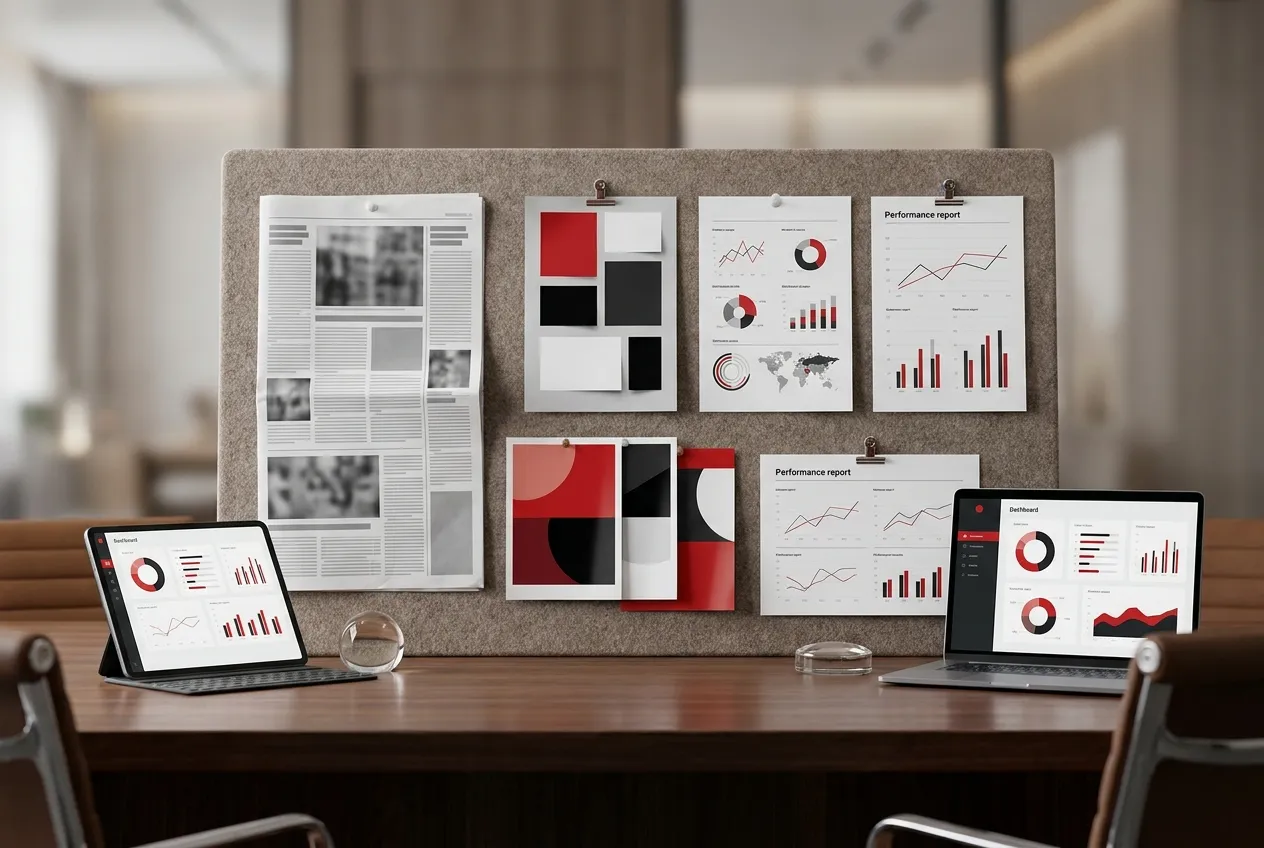
Performance improvements are driven by structured analysis, not assumptions. Every recommendation is based on measurable data, documented findings, and clear patterns identified across multiple sources.
Data Sources We Analyze
When evaluating advertising in the newspaper, we review both response data and execution quality.
Inside RockN' Socials CRM, we track call logs, form submissions, booked appointments, and tagged leads connected to each campaign. This allows us to measure which placements, dates, and publications generate actual inquiries.
From distribution platforms and local media networks, we review circulation numbers, placement positioning, run frequency, and publication timing. These factors influence visibility and audience alignment.
Using graphic design tools and Photoshop, we assess ad clarity, layout hierarchy, font readability, and image contrast. Poor visual structure often reduces response rates, even when placement is strong.
We also examine:
Offer clarity and call to action strength
Consistency between ad messaging and landing pages
Geographic targeting accuracy
Repetition frequency within the newspaper for advertising
Each signal helps us determine whether performance issues stem from placement, creative execution, or targeting strategy.
Example Findings We Often Identify
During audits, we frequently uncover patterns such as:
Strong circulation reach but low tracked responses
Clear branding but weak call to action language
Ads placed in low-engagement sections of an advertising newspaper
Inconsistent run schedules that limit repetition impact
We document these findings inside the CRM and compare them against inquiry trends. For example, if calls increase only after repeated weekly placements, that indicates frequency matters more than creative changes.
In other cases, we identify design issues such as overcrowded layouts or low contrast headlines. These reduce readability, especially in print environments where attention is limited.
Resolving these issues typically improves response consistency rather than creating short-term spikes.
Example Analysis Scenario
For businesses operating in Daytona Beach, we often see strong visibility but uneven engagement depending on the publication section.
In one typical scenario, a service provider may receive steady impressions through local media networks but experience inconsistent lead volume. We compare:
Publication dates versus CRM lead timestamps
Ad placement sections within the newspaper
Offer structure and headline clarity
Distribution timing relative to seasonal demand
If leads cluster around specific dates, that may indicate stronger audience alignment on certain publication days. If engagement remains flat despite premium placement, creative clarity is often the limiting factor.
We avoid making changes until we confirm patterns across at least two data sources.
Real Tool Workflow
Our evaluation process combines operational and creative tools.
RockN' Socials CRM tracks actual response behavior.
Local media networks provide circulation and placement data.
Distribution platforms confirm timing and run frequency.
Graphic design tools and Photoshop allow us to audit and refine layout performance.
By comparing response data with placement and creative variables, we avoid incorrect conclusions. For example, low inquiries may appear to be a targeting issue, but CRM timestamps may show that limited repetition is the true cause.
Each tool provides a different signal. Together, they create a complete performance picture.
How Improvements Are Prioritized
Improvements are ranked based on measurable impact and implementation speed.
We prioritize:
Changes that affect response clarity, such as headline or call to action adjustments
Placement optimizations supported by CRM lead patterns
Frequency improvements when repetition gaps are identified
Creative refinements that improve readability without increasing cost
By addressing the highest-impact variables first, we ensure campaigns become more efficient before expanding budget or distribution. This structured approach keeps performance improvements predictable and data-driven rather than reactive.
Our Process
Good results come from a structured process, not last-minute changes or guessing. For advertising in the newspaper, we follow a repeatable workflow that keeps messaging consistent, deadlines on track, and placements aligned with the right readers.
Step 1: Initial Assessment
We start by reviewing your current marketing and customer path so the print ad has a clear job to do. This includes a quick review of your website or landing page, your main services, and how you currently capture leads (calls, forms, walk-ins, or appointments). We also look at your existing offers and how they are explained—because print space is limited, the message must be simple and easy to act on.
If you’re a company serving customers in Daytona Beach, we also consider real local factors like seasonal demand swings and whether your customers are more likely to respond to coupons, calls, or in-person visits. The goal is to understand what will make someone take action after seeing your ad.
Step 2: Strategic Planning
Next, we turn what we learned into a clear plan. We define the campaign goal (for example: generate calls, promote a limited-time offer, or drive foot traffic) and choose the most direct call to action to match it. We also decide what information must be included to build trust quickly—such as service area, licensing, or a short list of core benefits.
From there, we map out placement priorities: which sections of a publication best fit your audience, what ad size makes sense for the message, and what run timing supports the goal. For example, some campaigns perform better around weekends, pay cycles, or community event calendars. This step matters because a strong offer can underperform if it’s shown at the wrong time or to the wrong readers.
Step 3: Implementation
With the plan approved, we build the ad content and prepare it for print submission. We draft the headline, supporting copy, and call to action, then assemble the layout so it is easy to scan. We also make sure the ad matches your brand (colors, logo use, and tone) and that key details are not buried, such as phone number, address, or URL.
We create versions as needed for different sizes or placements. If you want to use advertising newspaper placements to test different offers, we keep the structure consistent so results are easier to compare. Before anything is submitted, we run a final quality check to confirm accuracy, readability, and that the creative meets the publication’s requirements.
Step 4: Monitoring and Measurement
After the ad runs, we track response in practical ways. Depending on your setup, that may include call tracking, coupon codes, dedicated forms, or a simple inquiry log. We also document what ran and when, so you can tie spikes in calls or visits back to specific run dates.
This step matters because print results often show up in patterns—like a strong response window right after delivery days—so timing and consistency are important when judging performance.
Step 5: Continuous Refinement
We use what we learn to improve the next round. That might mean tightening the headline, simplifying the offer, adjusting run frequency, or changing the call to action to better match how customers actually respond. Over time, we aim to reduce wasted space, remove weak messaging, and repeat what proves effective, while keeping the campaign easy to manage and consistent for your audience.
Pricing
Pricing depends on the project scope, technical complexity, and the goals of each business. Market conditions in Daytona Beach can affect placement costs and production rates, so local competition and audience reach are common drivers of budget variation.
Projects typically start around $100–$1,500 — small community placements or single-run display and classified ads suitable for local shops or one-time promotions.
Most businesses invest between $1,500–$5,000 — ongoing weekly or monthly placements, multiple ad sizes, creative design, and basic scheduling for steady local visibility.
Larger or more complex implementations may range $5,000–$25,000+ (multi-region placements) — coordinated campaigns across several publications or markets, advanced creative production, higher circulation buys, and campaign measurement.
Common factors that influence final pricing include:
size of the website
number of pages or services involved
technical complexity
competitiveness of the market
level of ongoing support required
current condition of the website
These elements affect how much design, copywriting, production, and media buying are needed to meet your goals. For example, a campaign tied to a large site or multiple service pages often requires more creative assets and tracking setup than a one-off ad.
Most projects begin with a short consultation or audit to confirm objectives and the right placement mix. That initial review helps set a realistic scope so businesses only invest in the placements and services that will deliver practical value.

Next Step
The next step is a consultation to learn about your business goals and current situation. This conversation is focused on businesses operating in Daytona Beach so we can align local needs with outreach efforts.
During the call we will clarify priorities, scope, timeline, and level of work needed. That helps set realistic expectations and ensures we focus on what matters most.
The purpose is to identify practical opportunities that make sense for your audience and resources. It also helps determine whether the service is a good fit for your needs.
If you would like to explore the service further, you can schedule a consultation.
FAQ'S
Frequently Asked Questions
Quick answers about how we help businesses grow.