
Service
Advertising In A Magazine In Daytona Beach For Qualified Leads

Advertising in a magazine gives businesses a way to stay visible in front of readers who are already engaged and paying attention. For companies in Daytona Beach that rely on steady inquiries, print placements in trusted local and industry publications can drive phone calls, store visits, and branded searches. We often see businesses pouring budget into digital ads because their website traffic is inconsistent or their service pages fail to convert. A well-placed print campaign reinforces credibility, keeps your brand top of mind, and supports other marketing channels by reaching qualified audiences where they already spend time.
Effective magazine advertising starts with choosing publications that match your target demographic and aligning the ad creative with specific offers or services. Many businesses approach advertising in magazine without clear tracking, missing opportunities to connect placements to landing pages, call tracking numbers, or campaign-specific URLs. Strategic advertising for magazine campaigns works best when tied to measurable goals and coordinated with broader marketing efforts, especially for companies managing dozens of service pages or expanding into new markets.
At RockN' Socials, we support local service businesses and professional service firms with structured campaign planning and data-driven visibility analysis before a single ad goes to print. Our process includes detailed placement research and performance mapping supported by search visibility reports and call tracking insights. On this page, you will see how we plan, design, and measure magazine placements to generate qualified leads with clarity and accountability.
What You Get
When you invest in advertising in a magazine, you receive a structured campaign plan, professionally designed creative, and coordinated placement within selected publications. Every step is documented so you can review strategy, approve materials, and understand how your budget is being used.
Deliverables
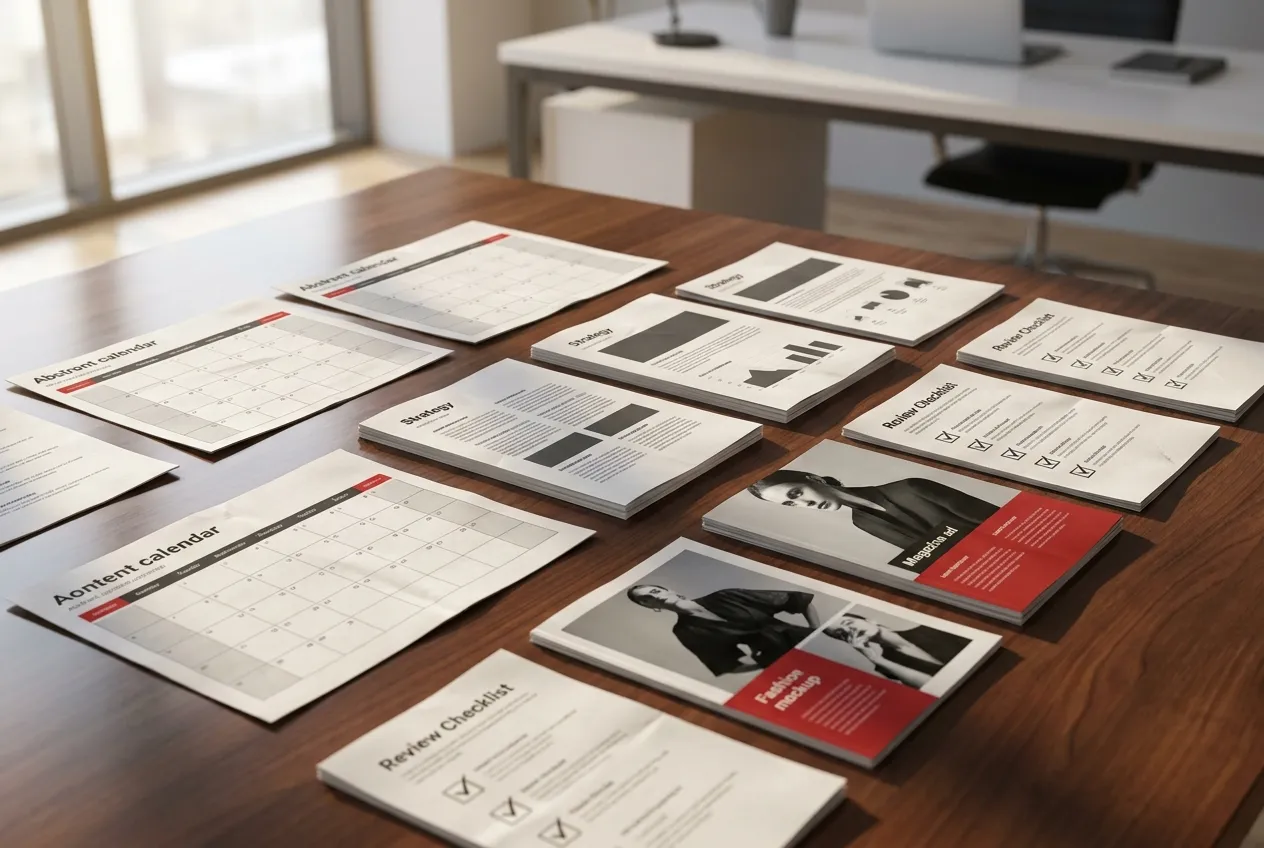
Campaign Strategy Document
A written plan outlining publication targets, audience demographics, ad size, placement options, flight dates, and messaging priorities. This includes a breakdown of how the campaign supports brand awareness, lead generation, or offer promotion.Publication Selection Report
A shortlist of 3 to 5 vetted print or hybrid publications aligned with your target demographic. The report outlines readership profiles, circulation data provided by publishers, ad specifications, and estimated placement costs. This is especially important for businesses operating in Daytona Beach that need to reach defined local or regional audiences.Ad Design Files
Professionally designed ad creative tailored to each publication’s technical requirements. You receive print ready files in approved dimensions, color profiles, and formats. Design includes layout, typography, imagery, and offer messaging structured for effective magazine advertising.Ad Placement Coordination Summary
A documented record of publication communication, insertion orders, submission deadlines, and confirmation of placement. This ensures your advertising in magazine publications runs according to the approved schedule.Campaign-Level Reporting
A performance summary delivered after each campaign cycle. This includes placement confirmation, circulation details, estimated impressions provided by publishers, and tracking notes if unique URLs, phone numbers, or promo codes were used.Quarterly Review Document
A strategic review of performance trends, publication effectiveness, creative adjustments, and recommendations for future advertising for magazine placements.
Tools and Access
RockN' Socials manages campaigns using RockN' Socials CRM to track timelines, approvals, and publisher communication. Graphic design software and Photoshop are used to produce press ready creative files that meet print specifications.
Media placement networks and audience targeting tools are used to evaluate readership data and compare publication options.
To move forward, we may request temporary access to brand asset folders or shared drives for logos, imagery, and brand guidelines. No access to your internal systems is required.
What You’ll Be Able to Review
You will be able to review:
The full campaign strategy document before any placements are booked
Draft ad layouts prior to final approval
Publication selection reports with audience details
Insertion order confirmations and placement schedules
Final print ready files
Campaign-level reporting and quarterly review documents
This structure gives you visibility into both creative development and media placement decisions.
What We Need From You to Start
To begin, we need:
Brand assets including logo files, brand colors, and existing imagery
A clear description of your target audience and geographic focus
Offer messaging, calls to action, or promotion details
Budget range and preferred campaign timeline
With this information, we can build a documented plan and execute a structured advertising campaign designed to reach your intended readership effectively.
How We Evaluate and Improve Performance
Performance improvements are based on structured analysis and measurable data, not assumptions. Every recommendation for advertising in a magazine is guided by clear signals from audience behavior, placement quality, and campaign response tracking.
Data Sources We Analyze
We evaluate performance using multiple data points collected before, during, and after publication.
Key sources include:
RockN' Socials CRM to track inbound leads, call logs, and tagged responses tied to specific publications
Media placement networks to review circulation data, readership demographics, and distribution accuracy
Audience targeting tools to validate that the publication’s readership matches the intended customer profile
Graphic design software and Photoshop to assess layout clarity, readability, and visual hierarchy
Internal campaign strategy documentation to confirm alignment between message, offer, and audience
We analyze response patterns such as inquiry timing, geographic concentration of leads, and offer redemption behavior. For magazine advertising, understanding who responds and when they respond is just as important as how many respond. This helps determine whether the issue lies in creative execution, audience selection, or placement timing.
Example Findings We Often Identify
During audits, we often uncover patterns such as:
Strong readership alignment but low inquiry volume, indicating weak calls to action
High-quality ad design but placement in low-visibility sections of the publication
Correct demographic targeting but messaging that does not match audience intent
Inconsistent lead tagging inside the CRM, making performance harder to measure
Each finding is documented inside our campaign-level reporting system. We identify whether the limitation is strategic, creative, or distribution-based. Resolving these issues improves advertising for magazine placements because adjustments are made based on evidence rather than preference.
Example Analysis Scenario
For businesses operating in Daytona Beach, we sometimes see strong visibility in regional lifestyle publications but limited qualified inquiries. In one analysis scenario, circulation reports showed high distribution numbers, yet CRM tracking revealed that most responses came from outside the intended demographic.
We compared audience targeting tool data with actual lead profiles stored in RockN' Socials CRM. This cross-check showed that while the publication had broad reach, it lacked concentration in the niche segment the business needed. The issue was not the ad design or the offer. It was publication selection.
By comparing readership demographics, placement position, and inquiry data together, we isolate the true cause before recommending changes. This prevents unnecessary redesigns or budget shifts.
Real Tool Workflow
Our workflow connects tools rather than using them in isolation.
We start with media placement networks to confirm distribution accuracy and reader demographics. Next, we analyze lead source data inside RockN' Socials CRM to see how inquiries map back to specific issues or editions. If response rates are low, we review the creative inside graphic design software and Photoshop to assess layout balance, readability, and call-to-action clarity.
Audience targeting tools validate whether the publication’s readership still matches the campaign strategy. Combining these systems prevents incorrect conclusions, such as blaming creative when the real issue is audience mismatch.
How Improvements Are Prioritized
Improvements are ranked using a structured evaluation model:
Audience alignment issues are addressed first because they affect overall ROI
Placement visibility problems come next
Creative refinements follow once distribution and targeting are validated
Reporting gaps are corrected to ensure accurate future analysis
Quarterly reviews allow us to compare trends across multiple placements and editions. By prioritizing changes that directly affect lead quality and demographic alignment, we ensure that magazine advertising investments are refined based on measurable performance signals rather than assumptions.

Our Process
Strong results come from a structured workflow, not random changes or last-minute ad placements. Our process keeps your message consistent, your timelines clear, and your placements aligned with the audience you want to reach through advertising in a magazine.
Step 1: Initial Assessment
We start by reviewing your current marketing materials and digital presence to understand your starting point. This includes your website, landing pages, social profiles, and any existing print or brand collateral you use.
We look for practical details that affect print performance, such as:
Whether your offer is clear and easy to understand
If your contact paths work (forms, phone numbers, location pages)
How well your branding holds up across channels
Any current proof points you can feature (reviews, credentials, guarantees)
For businesses operating in Daytona Beach, we also consider seasonal demand patterns and how customers typically discover local services, so the ad supports how people actually make buying decisions.
Step 2: Strategic Planning
Next, we turn what we learned into a clear plan. This step defines who the ad is for, what the reader should do next, and what success should look like for the campaign.
Planning decisions include:
Target audience and buying intent (who you want reaching out, and why)
Core message and supporting proof (what you want to be known for)
Offer structure and response method (call, form, promo code, or dedicated page)
Ad size and placement approach based on your goals and budget limits
Timeline planning to match publication schedules and production deadlines
This is also where we confirm requirements from each publication so the creative is built to the right specs from the start.
Step 3: Implementation
Implementation is where the campaign gets built and prepared for print submission. We create the ad concept, write the copy, and design the layout so it is easy to read and structured for quick scanning.
Key execution steps include:
Drafting a clear headline, main message, and call to action
Designing the layout with strong hierarchy (what the eye sees first, second, third)
Selecting images and visual elements that fit your brand and the publication style
Preparing print-ready files that match technical requirements like dimensions and color settings
Coordinating deadlines and approvals so nothing is rushed at the last minute
We also verify that any tracking elements you choose (like a dedicated page or unique contact method) are working before the ad runs.
Step 4: Monitoring and Measurement
After placement, we document what ran, when it ran, and what response signals we can measure. Print does not produce the same instant feedback as some digital channels, so we focus on clean tracking setups and consistent recordkeeping.
Measurement may include:
Placement confirmation and run dates
Changes in calls, form fills, or inquiries tied to the campaign
Notes on which messages or offers appear to drive better responses
Observations you share from real customer conversations
Step 5: Continuous Refinement
We use what we learn to improve the next cycle. Refinement might mean adjusting the message, simplifying the offer, changing the response path, or updating the design for better readability.
For companies serving customers in Daytona Beach, this can also include aligning ad timing with local event seasons or travel peaks so the placement matches when demand is highest. Over time, these improvements help you build a repeatable approach to magazine advertising that gets clearer and more efficient with each run.

Pricing
Pricing for print ad placement varies based on project scope, creative complexity, and the specific goals of the business. Companies serving customers in Daytona Beach should expect local market rates and publication availability to affect final costs, so estimates start with a review of objectives and target audiences.
Projects typically start around $500–$3,000 — small businesses buying a single placement or a one-off professionally designed ad for a local publication with minimal production needs.
Most businesses invest between $3,000–$15,000 — regional campaigns that include multiple placements, custom creative and copy, placement scheduling, and basic performance tracking across several targeted publications.
Larger or more complex implementations may range $15,000–$500,000+ (national distribution campaigns) — full-scale campaigns with national circulation buys, extensive creative production, frequent runs, and advanced distribution logistics.
Common factors that influence pricing include:
size of the website — existing online properties can affect how ads coordinate with digital assets and landing pages.
number of pages or services involved — broader offerings often require more creative variations and messaging.
technical complexity — custom art direction, special printing specs, or integrated tracking increase costs.
competitiveness of the market — higher-demand publication slots and competitive industry categories raise placement rates.
level of ongoing support required — recurring creative updates, scheduling management, and reporting add to long-term investment.
current condition of the website — if landing pages need improvement, additional budget may be required to ensure ad traffic converts.
Most projects begin with a consultation or creative review to define the scope and align investment with measurable objectives so businesses only pay for the work that delivers real value.

Next Step
The next step is a consultation to understand your business goals and current situation. We use this time to hear about your objectives, where things stand right now, and any immediate challenges.
The conversation helps clarify priorities, scope, timeline, and the level of work needed. For businesses operating in Daytona Beach, it also helps us consider local market conditions.
The purpose of this conversation is to identify practical opportunities that align with your goals. It also helps determine whether the service is a good fit for your situation.
If you would like to explore the service further, you can schedule a consultation.
FAQ'S
Frequently Asked Questions
Quick answers about how we help businesses grow.