
Service
Brand Logo Development In Daytona Beach For Consistent Lead Generation

Brand logo development is the foundation of how customers recognize, trust, and choose your business. When companies in Daytona Beach struggle to generate consistent leads, the issue often starts with a weak or inconsistent brand identity that confuses visitors and lowers conversion rates. I have seen businesses invest heavily in paid ads while their website fails to convert because the logo, typography, and color system do not communicate credibility or premium positioning. A clear, strategic brand system improves recognition, strengthens messaging, and supports every marketing channel from search to social.
In practice, performance is often limited by deeper structural issues that go beyond design taste. Poor site architecture, weak internal linking, and indexing gaps can prevent branded pages from ranking properly, especially for companies managing dozens of service pages. Inconsistent visual assets across landing pages also dilute trust signals that search engines and users rely on. Without alignment between brand presentation and technical structure, growth stalls even when traffic increases.
At RockN' Socials, we use structured optimization roadmaps to align brand identity with measurable search performance. Our process includes technical audit reports that map visual consistency to crawl behavior and on page structure. We work closely with local service businesses and growing companies across Daytona Beach to build complete brand systems that support long term visibility. Below, you will see how our approach turns brand clarity into consistent lead generation.
What You Get
This service provides a complete visual identity system that defines how your business looks and communicates across every platform. You receive structured design assets, documented standards, and a finalized brand package that can be used immediately across digital and print materials.
Deliverables
Logo design concepts (3 initial concepts)
Three distinct logo directions based on your brand positioning, each presented with mockups and rationale explaining typography, layout, and symbol usage.Refined logo system
One finalized logo suite including primary logo, secondary variation, submark, and favicon versions delivered in multiple file formats (SVG, PNG, JPG, PDF).Brand identity development document
A structured brand strategy summary outlining mission, positioning, tone of voice, and visual direction to guide long term consistency.Typography systems
Defined primary and secondary typefaces with usage guidelines, hierarchy structure, and pairing examples for web, print, and social media.Color palette creation
A core and extended color system with HEX, RGB, and CMYK codes to ensure consistent reproduction across platforms.Brand kit documentation
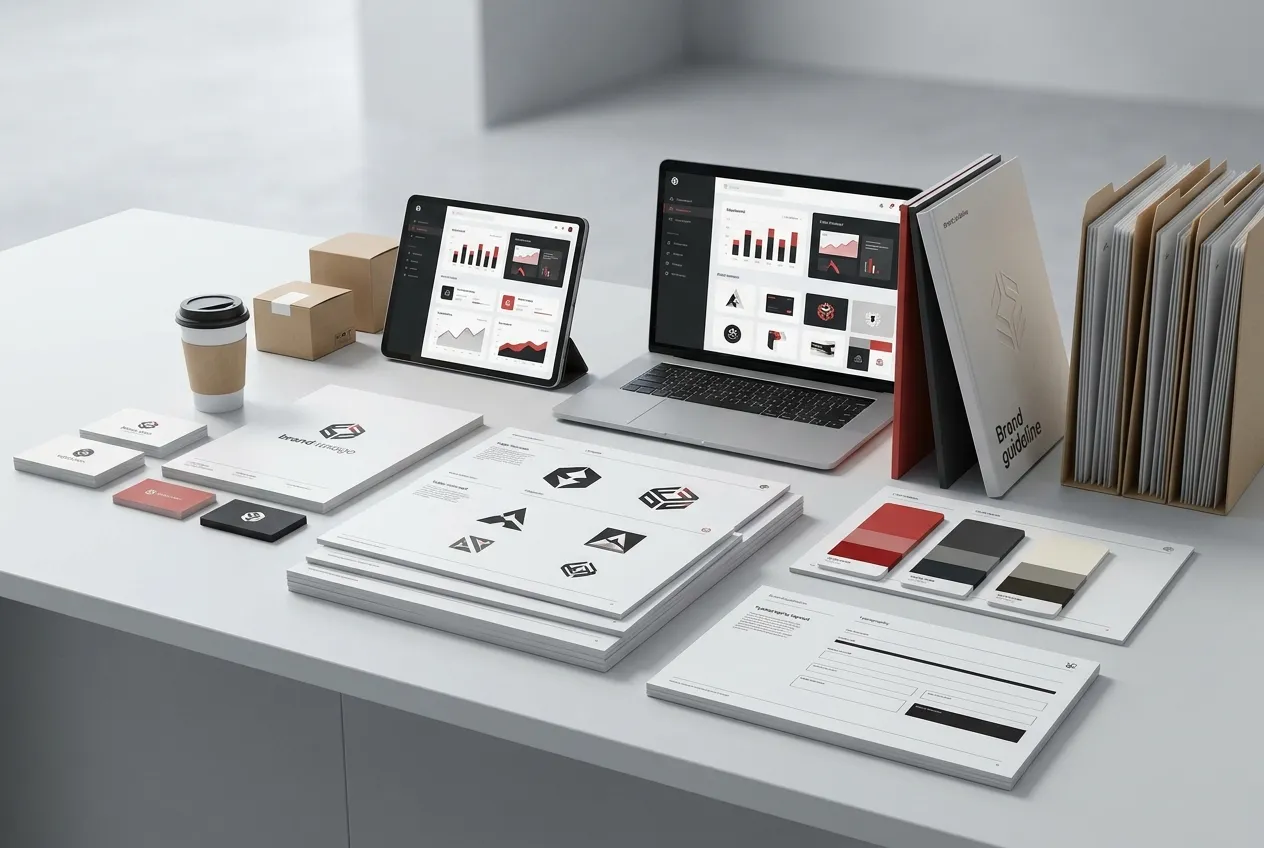
A downloadable brand kit PDF that includes logo usage rules, spacing requirements, minimum sizing, color ratios, typography rules, and approved background treatments.File organization package
A clearly labeled folder structure for internal use or sharing with designers, developers, and print vendors.
This framework is designed to help businesses operating in Daytona Beach establish a cohesive identity that aligns with their audience and local market positioning.
Tools and Access
We manage the project through RockN' Socials CRM, where timelines, approvals, and milestone updates are tracked.
Design work is completed using professional graphic design software, advanced typography tools, structured brand development systems, and professional visual identity platforms to ensure scalability and file integrity.
To begin, we require access to:
Core business information
Brand positioning details
Target audience information
Any existing logos, brand materials, or design assets
All final files are delivered digitally through a secure file transfer link and archived for future access.
What You’ll Be Able to Review
Throughout the project, you will review:
Initial concept presentations with design explanations
Logo revisions based on structured feedback rounds
Color palette and typography selections
Brand guideline drafts before finalization
Milestone updates at defined project stages
You will also receive a final brand delivery package that includes all approved files and documentation. This ensures you can share consistent assets with marketing teams, printers, web developers, and partners without confusion.
What We Need From You to Start
To begin the process, we require:
A completed brand questionnaire
A description of your products or services
Target audience demographics and preferences
Competitor examples
Any existing branding assets or style references
Clear input at the start reduces revision cycles and ensures the final identity reflects your business goals and audience expectations.
How We Evaluate and Improve Performance
Strong brand outcomes come from structured evaluation, not creative guesswork. Every brand logo development project is guided by documented research, visual testing, and milestone-based review to ensure the final identity performs in real-world conditions.
Data Sources We Analyze
Our evaluation begins with structured discovery inside the RockN' Socials CRM, where we document business goals, audience profiles, competitive positioning, and brand objectives. This ensures design decisions are aligned with measurable business intent rather than personal preference.
We then analyze:
Competitor brand visuals and positioning within the client’s industry
Typography trends and readability standards using professional typography tools
Color psychology frameworks and accessibility contrast standards
Existing brand assets and inconsistencies
Using professional graphic design software and visual identity platforms, we test logo scalability, contrast, and adaptability across digital and print formats. Through brand development systems, we evaluate how well proposed visuals support long-term brand architecture, not just a single logo mark.
Key signals we examine include clarity at small sizes, memorability, uniqueness in the market, and adaptability across platforms. These indicators directly affect recognition, trust, and usability.
Example Findings We Often Identify
During evaluation, we often identify:
Logos that lose clarity when scaled down for social media or mobile use
Typography that looks strong in headlines but fails in body text applications
Color palettes that conflict with accessibility standards
Brand visuals that resemble competitors too closely
These findings are documented within structured review checkpoints. Each issue is tied to a functional risk such as reduced readability, weak differentiation, or inconsistent application.
Resolving these issues improves long-term usability and brand consistency. Instead of focusing only on visual appeal, we correct structural weaknesses that could limit growth later.
Example Analysis Scenario
For businesses operating in Daytona Beach, we often analyze how a new brand identity compares against established local competitors. A company may have a visually appealing logo, yet when placed side by side with competitors, it lacks distinctiveness or premium positioning.
In this scenario, we compare:
Competitive logo styles and color usage
Industry typography patterns
Brand tone and visual density
We then test alternative visual directions inside our design systems to measure contrast, hierarchy, and recognition strength. By comparing competitive research, typography performance, and layout adaptability together, we determine whether the issue is stylistic similarity, weak hierarchy, or inconsistent visual language before recommending adjustments.
Real Tool Workflow
Our workflow integrates multiple tools to avoid subjective decision-making.
The RockN' Socials CRM tracks client goals and feedback at each milestone. Graphic design software allows us to test scalability, alignment grids, and export variations. Typography tools help evaluate spacing, kerning, and legibility across formats. Visual identity platforms simulate real-world brand applications such as websites, signage, and packaging.
Because each tool provides different performance signals, combining them prevents incorrect conclusions. A logo that looks strong in isolation may fail when tested in multi-format environments, which is why cross-platform simulation is essential.
How Improvements Are Prioritized
Improvement opportunities are ranked using three criteria:
Impact on brand clarity and recognition
Risk to long-term scalability
Alignment with strategic positioning
Structural issues such as legibility or scalability are prioritized before stylistic refinements. This ensures foundational performance is secure before aesthetic preferences are finalized.
By addressing high-impact weaknesses first, we create brand systems that remain consistent, adaptable, and competitive as the business grows.

Our Process
Strong brand work comes from a structured process, not random design changes. Our workflow is built to reduce guesswork, keep decisions consistent, and make sure the final identity system supports long-term use. This approach keeps brand logo development focused on strategy, clarity, and repeatable standards instead of personal preference.
Step 1: Initial Assessment
We start by reviewing your current digital presence and any existing brand materials to understand your starting point. This includes your website, social profiles, sales pages, and printed materials if you have them. The goal is to identify what is working, what feels inconsistent, and where customers may be getting mixed signals.
We also look for practical issues that can impact future rollouts, such as unclear naming, inconsistent visuals between platforms, or missing basic files. For businesses operating in Daytona Beach, we pay attention to how your brand shows up in a competitive, visual market where customers often compare options quickly.
Step 2: Strategic Planning
Next, we turn what we learned into a clear plan. We confirm your brand positioning, target audience, and the role your visual identity needs to play (for example: premium, approachable, technical, or bold). Then we define the creative direction before design begins.
This step includes outlining:
The core message your visuals should support
The tone your brand should communicate at a glance
Practical use cases (website header, social icons, signage, packaging, proposals)
Key constraints (must-work colors, readability needs, industry norms, or existing brand equity)
Strategic planning matters because it sets decision rules. When feedback comes in later, we can judge changes against the plan instead of debating opinions.
Step 3: Implementation
With direction approved, we move into design execution. We develop initial logo concepts, then refine the strongest direction based on structured feedback. As the logo system takes shape, we build supporting elements so your brand remains consistent across real-world applications.
Implementation also includes production-ready setup:
Clean, scalable file builds for different sizes and backgrounds
Consistent spacing and alignment rules
Color selections tested for on-screen and print use
Typeface choices checked for readability and practical availability
We manage timelines, approvals, and version control inside RockN' Socials CRM so decisions and assets stay organized.
Step 4: Monitoring and Measurement
After the identity is applied, we review how it performs in context. This is not about vanity metrics. It’s about usability and consistency. We check whether the logo holds up at small sizes, whether the typography is easy to read, and whether the colors reproduce consistently across different screens and printed materials.
We also look for brand consistency across your main touchpoints to confirm the system is being used as intended.
Step 5: Continuous Refinement
Brands live in the real world, so we plan for small adjustments based on what you observe after launch. This can include tightening usage rules, improving file organization, or making minor updates to ensure the identity stays consistent as you add new materials.
Continuous refinement matters because it protects your brand over time, helping your visuals stay clear and recognizable as your business grows.
Pricing
Pricing depends on the scope of work, technical complexity, and the specific needs of your business. For companies operating in Daytona Beach, local market competitiveness and target customers can influence the level of research and rollout required, which affects cost.
Projects typically start around $2000/Brand Kit — suitable for small startups or local service businesses that need a simple identity package and a handful of core assets.
Most businesses invest between $2,000-$30,000/Brand Kit — common for growing companies that require expanded asset sets, multiple logo variations, typography and color systems, and basic implementation guidelines.
Larger or more complex implementations may range $50,000+/Brand Kit — applies to enterprise programs, multi-location rollouts, or organizations that need deep research, extensive touchpoint design, and coordinated brand launches.
Common factors that influence pricing include the size of the website, number of pages or services involved, technical complexity of deliverables, competitiveness of the market, level of ongoing support required, and the current condition of the website or existing identity assets. Projects that require custom illustration, variable asset libraries, or integration across many channels will trend toward the higher end of the range.
Most engagements begin with a consultation or discovery review to define goals, map deliverables, and set a clear scope. That initial assessment helps determine the right level of investment so businesses only pay for the work that will deliver meaningful value.

Next Step
The next step is a consultation to understand your business goals and current situation. This conversation is tailored for businesses operating in Daytona Beach so we can consider your local context.
The conversation will help clarify priorities, scope, timeline, and level of work. That clarity makes it easier to see whether proposed efforts better match your needs.
The purpose of the conversation is to identify practical opportunities that align with your goals. It also helps determine whether the service is a good fit for your business.
If you would like to explore the service further, you can schedule a consultation.
FAQ'S
Frequently Asked Questions
Quick answers about how we help businesses grow.