
Service
Local Answer Engine Optimization (AEO) in Daytona Beach for More Qualified Leads

Local Answer Engine Optimization (AEO) in Daytona Beach for More Qualified Leads helps your business show up when people ask AI platforms who to hire, where to go, or which company to trust locally. Instead of hoping your website ranks somewhere on page one, this approach positions your business as the direct answer. Many businesses in Daytona Beach struggle with service pages that never gain traction, or they rely heavily on paid ads because organic traffic does not convert into real inquiries. When AI tools and voice assistants pull recommendations, most websites are simply not structured to be selected.
In practice, performance issues usually trace back to crawlability gaps, weak internal linking, thin service content, and unclear location signals. Search engines often index pages, but they do not fully understand which services should surface for specific local questions. This becomes more complex for companies managing dozens of service pages across different neighborhoods or specialties. Without structured data, clear topical clustering, and clean site architecture, AI systems skip over your business in favor of competitors with stronger authority signals.
RockN' Socials approaches AEO with structured technical audits and search visibility diagnostics built specifically for local service businesses and growing companies relying on inbound leads. We analyze crawl diagnostics, entity alignment, and intent gaps, then map improvements into a clear implementation roadmap supported by search visibility reports. On this page, you will see how we turn your website into a trusted local answer source rather than just another indexed listing.
What You Get
You receive a structured, documented system designed to improve how your business appears in AI-generated answers, voice results, and local search features. Every deliverable is built to make your online presence clearer, more authoritative, and easier for search engines and AI systems to understand.
Deliverables
Local AEO Strategy Document
A written strategy outlining target topics, service entities, location signals, competitor gaps, and priority optimization areas for businesses operating in Daytona Beach. This includes an implementation roadmap and a 90-day action plan.AI Answer Optimization Plan
A structured content brief library showing how key service pages and FAQs should be formatted for AI parsing. Includes recommended question structures, answer formats, and content hierarchy adjustments.Structured Data Implementation Map
A schema deployment plan identifying required markup types, placement locations, and validation steps. Includes testing logs and a structured data checklist for ongoing maintenance.Authority Signal Development Framework
A documented plan outlining citation improvements, content depth expansion, service page reinforcement, and entity association improvements designed to strengthen trust signals.Entity Optimization Report
A report mapping your core services, brand entities, and geographic relevance. Includes recommendations for internal linking, semantic reinforcement, and content expansion areas.AI Visibility Monitoring Dashboard
Ongoing tracking of how your business appears in AI-generated responses, featured snippets, voice queries, and search summaries. Includes monthly performance reporting and quarterly strategy reviews.
Tools and Access
This service is managed through RockN' Socials CRM for workflow tracking, implementation logs, and performance documentation.
We use proprietary authority optimization systems to identify content gaps and entity weaknesses. AI content structuring platforms help format answers for machine readability. SEO research tools and content optimization software are used to evaluate query patterns and refine page structure. Structured data and schema tools are used for validation and deployment accuracy. Google Search Console provides indexing, crawl, and visibility data.
To begin, we require:
Website CMS access
Google Search Console access
Google Analytics access
Google Business Profile access
These allow us to implement structured updates and monitor search performance.
What You’ll Be Able to Review
You will have access to:
A written strategy document with prioritized action items
Structured data implementation logs
Optimization checklists for each updated page
Monthly performance summaries outlining AI and search visibility trends
Quarterly review documents detailing strategic adjustments
Monitoring dashboards that show visibility changes over time
This allows you to track what has been implemented, what is being monitored, and how your visibility is evolving.
What We Need From You to Start
To begin, we need:
Administrative access to your website CMS
Verified ownership access to Google Search Console and Google Analytics
Access to your Google Business Profile
A list of core services and priority markets
Any existing brand guidelines or content standards
This ensures we can accurately map your services, strengthen authority signals, and align your online presence with how customers search for companies serving customers in Daytona Beach.

How We Evaluate and Improve Performance
Performance improvements are never based on assumptions. Every recommendation is built on structured analysis, measurable data, and cross platform validation to ensure decisions are grounded in real visibility signals.
Data Sources We Analyze
We begin by collecting data from multiple systems to understand how AI platforms and search engines interpret a business.
Using Google Search Console, we review impressions, query patterns, indexing status, and structured result visibility. This helps us see how content is being surfaced and whether it aligns with conversational search behavior.
Inside the RockN' Socials CRM, we track lead sources, engagement signals, and user paths. This connects AI visibility to real business outcomes rather than surface level metrics.
We also rely on:
SEO research tools to evaluate entity associations and topic coverage
Structured data and schema tools to validate markup accuracy
AI content structuring platforms to assess formatting and answer extraction readiness
Content optimization software to compare topical depth and semantic alignment
Proprietary authority optimization systems to measure credibility signals and entity strength
Each data source provides a different signal. When combined, they show whether Local Answer Engine Optimization is improving discoverability, answer selection likelihood, and authority positioning.
Example Findings We Often Identify
During analysis, we frequently uncover patterns such as:
Pages indexed but not selected for AI generated answers
Structured data present but improperly nested or incomplete
Strong rankings but weak entity alignment
High impressions for question based queries with low engagement
We document each issue based on impact level and root cause. For example, if content ranks but is not being cited in AI responses, we examine formatting structure, entity clarity, and schema consistency. Resolving these issues improves the probability of answer inclusion and strengthens authority signals across platforms.
Example Analysis Scenario
For businesses operating in Daytona Beach, we often see competitive saturation in core service queries. A company may appear in traditional search results but fail to surface in AI driven summaries.
In one common scenario, impressions increase for conversational queries, yet engagement remains flat. We compare Google Search Console query data with CRM lead tracking and structured data validation reports. If the content is visible but not influencing action, we evaluate entity prominence, schema completeness, and answer formatting.
By reviewing multiple systems together, we determine whether the issue is discoverability, extraction eligibility, or authority weighting before making adjustments.
Real Tool Workflow
Our workflow begins with search visibility diagnostics in Google Search Console. From there, we validate structured data implementation using schema tools and confirm formatting compatibility through AI content structuring platforms.
SEO research tools help us evaluate competitive entity positioning. Content optimization software measures semantic depth against high performing competitors.
All findings are logged in the RockN' Socials CRM, where visibility signals are mapped against engagement and lead behavior. Our proprietary authority optimization systems then assess credibility gaps that may limit answer inclusion.
Using multiple tools prevents misdiagnosis. For example, low visibility could stem from indexing issues, weak schema signals, or unclear entity relationships. Each platform isolates a different variable.
How Improvements Are Prioritized
After analysis, we rank opportunities based on:
Impact on AI answer eligibility
Authority signal strength
Technical barriers preventing inclusion
Competitive gaps within the local market
High impact structural issues are addressed first, followed by authority development and entity refinement. Monthly performance reporting tracks measurable changes, while quarterly strategy reviews adjust priorities based on evolving AI visibility patterns.
This structured process ensures that improvements are strategic, evidence based, and aligned with how answer engines evaluate trust and relevance.
Our Process
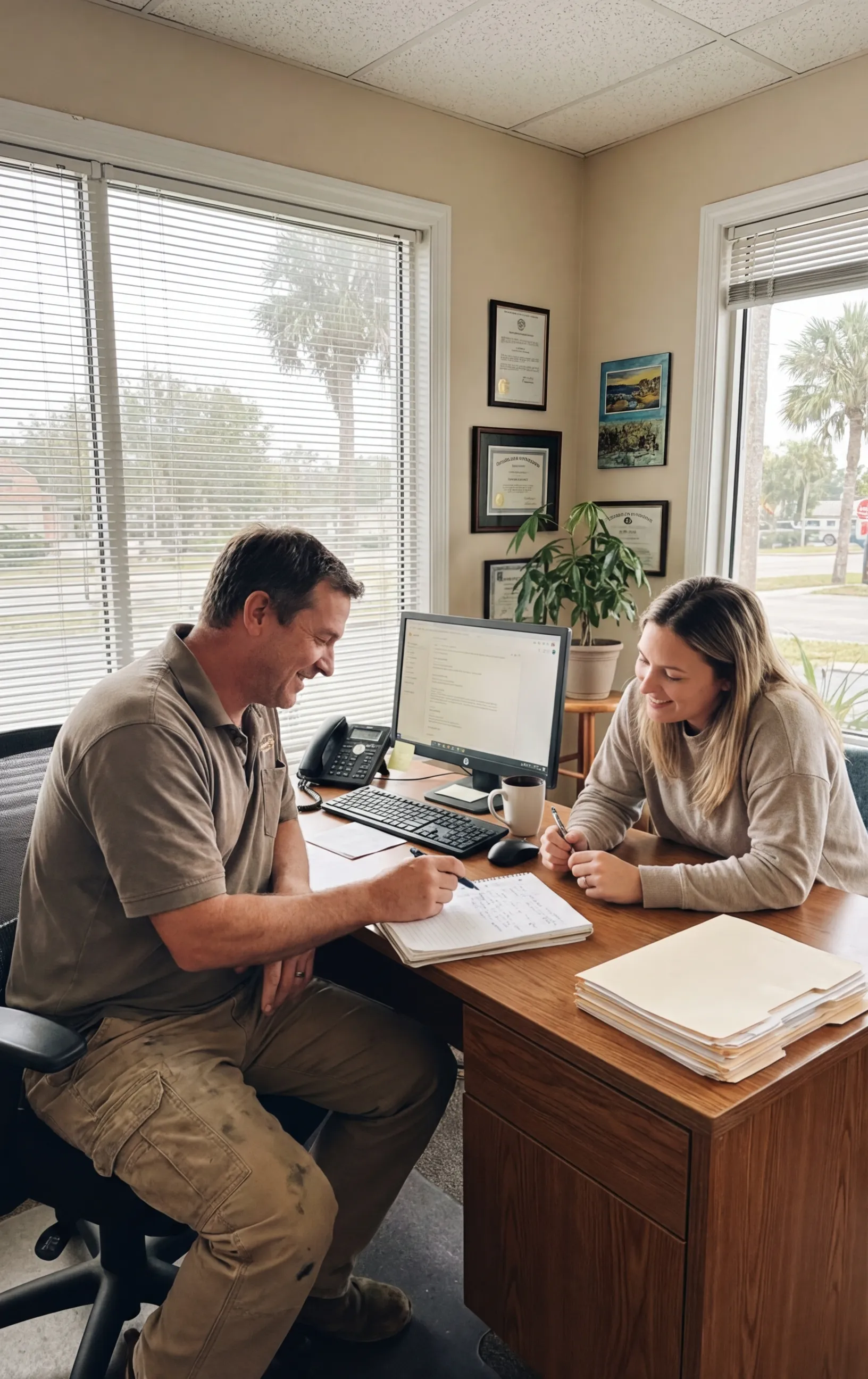
Strong results come from a structured process, not random edits. We follow a repeatable workflow that helps your business become easier for AI systems to understand, reference, and present in location-based answers.
Step 1: Initial Assessment
We start by reviewing your full digital footprint to understand what AI systems can “see” today. This includes a scan of your main service pages, supporting pages, and any FAQ-style content to check whether key details are clear, consistent, and easy to interpret.
We also look at technical and structural items that affect how content is read, such as page layout, headings, internal navigation, and how important information is placed on the page. Next, we review your business identity signals across your website and major profiles to confirm that core details match and are not sending mixed messages.
Finally, we capture baseline performance indicators so later changes can be measured against a clear starting point.
Step 2: Strategic Planning
After the assessment, we turn findings into a practical plan. We prioritize what to fix first based on what will remove the biggest points of confusion for AI systems and what will improve clarity for real customers.
This step includes selecting the question themes your customers actually ask, choosing which pages should answer which questions, and deciding where supporting content is needed. For businesses operating in Daytona Beach, we also account for local market conditions, such as common service-area language and how people describe nearby neighborhoods and destinations when they search.
The output of this step is a clear sequence of work: what will be updated, in what order, and what “done” looks like for each item.
Step 3: Implementation
Implementation is where the plan becomes real changes. We update page structure to make answers easier to extract and summarize. That can include rewriting sections to lead with direct answers, tightening definitions of services, and improving how pages connect to each other so context is not lost.
We also apply structured markup where appropriate so your services, business details, and key page elements can be interpreted more reliably. Alongside on-site updates, we clean up supporting signals (like inconsistent business details) that can weaken trust and cause AI systems to hesitate when selecting sources.
All updates are tracked so changes are controlled, reviewable, and easy to validate.
Step 4: Monitoring and Measurement
Once updates are live, we monitor how your content is being processed and reflected in real-world results. We watch indexing and crawl activity, then track whether pages begin appearing more often in AI-generated summaries, voice-style results, and local features.
We also review engagement signals on updated pages to confirm the new structure is helping users find answers faster. Monitoring is not just about numbers—it helps us confirm whether the changes are being interpreted the way we intended.
Step 5: Continuous Refinement
AEO is not “set it and forget it.” AI systems and customer behavior change, and your content needs to keep pace. We use what we learn from monitoring to refine page sections, adjust how questions are answered, expand coverage when new topics emerge, and correct anything that creates ambiguity.
Over time, this creates a stronger, more consistent knowledge footprint for companies serving customers in Daytona Beach—built through steady improvements that compound instead of one-time edits.
Pricing
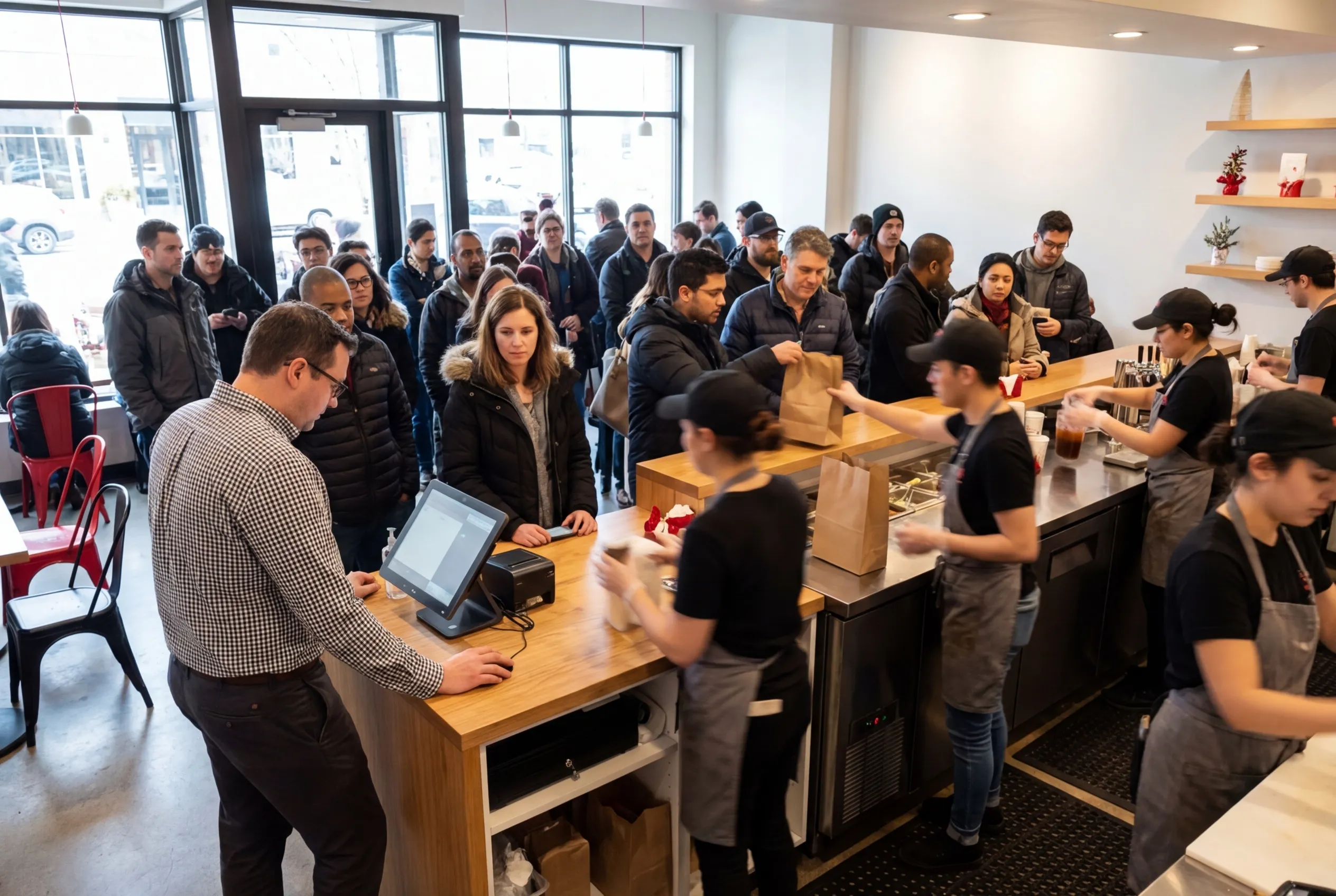
Pricing varies with the scope of work, technical complexity, and the specific needs of the business. Companies serving customers in Daytona Beach often face local competition and listing nuances that affect effort and cost, so final fees reflect those local conditions plus the project’s overall goals.
Projects typically start around $9,000 Setup ($3,000/Month) — appropriate for small, single-location businesses that need a focused setup and basic ongoing monitoring.
Most businesses invest between $9,000 Setup ($3,000/Month) — a common level for multi-service local companies that require a broader content structure and moderate monthly optimization.
Larger or more complex implementations may range $10,000+ Setup ($5,000+/Month) — applies to enterprise-level sites, multi-location brands, or projects that require advanced integrations and heavy content and technical work.
Common factors that influence pricing include:
size of the website — larger sites require more auditing, mapping, and content work.
number of pages or services involved — more pages mean more optimization and testing.
technical complexity — integrations, platform constraints, and custom development raise cost.
competitiveness of the market — crowded local markets need more investment to stand out.
level of ongoing support required — monthly monitoring, content updates, and reporting affect recurring fees.
current condition of the website — sites with technical debt or poor structure need more upfront remediation.
Most engagements begin with a consultation and a site or profile review to define the correct scope. That initial review helps ensure businesses only invest in the improvements that will provide measurable value.
Next Step
The next step is a consultation to understand your business goals and current situation. We will tailor this conversation to businesses operating in Daytona Beach so the notes reflect local needs and customer context.
During the call we will clarify priorities, the expected scope of work, an estimated timeline, and the overall level of effort. That helps set clear expectations and makes it easier to compare options.
The goal of the conversation is to identify practical opportunities your business can use and to see if this service fits your needs. At the end of the call both sides will have clarity about fit and practical options to consider.
If you would like to explore the service further, you can schedule a consultation.
FAQ'S
Frequently Asked Questions
Quick answers about how we help businesses grow.