
Service
Content Strategy For Linkedin In Daytona Beach For Consistent Lead Generation
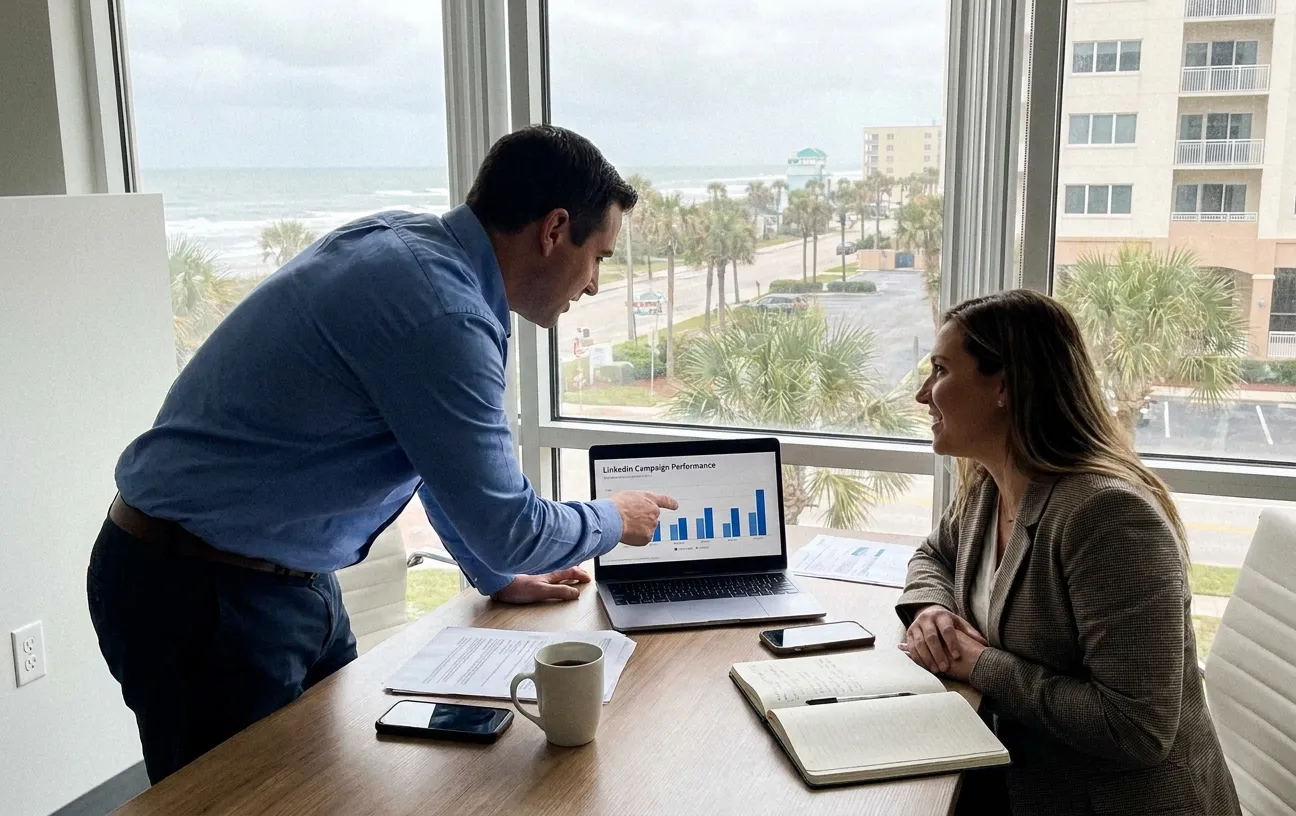
Content strategy for linkedin is the difference between posting occasionally and turning your profile into a steady source of leads. Many businesses in Daytona Beach rely heavily on paid ads or referrals because their LinkedIn presence feels inconsistent or unclear. When content lacks direction, even strong expertise gets buried in the feed. A structured plan aligns messaging with buyer intent, builds authority over time, and creates consistent touchpoints that turn profile views into real conversations and qualified inquiries.
Before optimization, most accounts suffer from unclear positioning, weak internal linking between posts and service pages, and missed keyword targeting that limits discoverability. A documented linkedin content strategy ensures every post supports a defined audience, service focus, and conversion path. Proper linkedin company page optimization improves how your services are presented, strengthens credibility signals, and supports companies managing dozens of service pages or expanding into new markets.
RockN' Socials approaches this with structured optimization roadmaps built from data-driven ranking analysis and search visibility diagnostics. We review performance through detailed search visibility reports to identify content gaps, messaging breakdowns, and missed authority opportunities. Our work supports local service businesses, professional service firms, and growing companies relying on inbound leads. On this page, you will see how we plan, publish, and refine LinkedIn content to create consistent lead generation.
What You Get
With LinkedIn Account Management, you receive a structured system for planning, publishing, and improving your presence on LinkedIn. Every deliverable is documented, scheduled, and measurable so you can see how your visibility and authority are developing over time.
Deliverables
Documented content strategy outlining audience segments, positioning, topic clusters, post formats, and messaging pillars aligned with your offers and industry positioning goals.
Monthly content calendar delivered in a shareable document that maps out post dates, themes, formats, and call-to-action types for the upcoming month.
Post creation and copywriting including written posts, hooks, structured captions, and formatting optimized for reach and engagement on the LinkedIn platform.
Publishing and scheduling setup using approved scheduling tools to ensure consistent posting cadence and time-of-day optimization.
Profile optimization updates to support stronger positioning and credibility, aligned with best practices for linkedin company page optimization and executive profiles.
Audience growth strategy document outlining connection criteria, engagement workflows, and outreach positioning to support long-term personal branding on linkedin.
Engagement monitoring log tracking comments, direct messages, and interaction patterns to identify lead signals and conversation opportunities.
Monthly performance report summarizing post reach, engagement rates, follower growth, content themes, and observed audience behavior.
Quarterly strategy review summary with adjustments to positioning, messaging, and topic priorities based on content performance analysis and market feedback, especially for businesses operating in Daytona Beach or serving that market.
Tools and Access
We manage your account using:
RockN' Socials CRM for tracking content planning, engagement signals, and pipeline conversations.
LinkedIn Platform for publishing, analytics review, and direct audience interaction.
Content scheduling tools for consistent posting and workflow management.
AI copywriting tools to assist with drafting, ideation, and headline testing.
Analytics tools for tracking reach, engagement, and growth trends.
Brand voice systems to ensure messaging consistency across all posts.
To implement the service, we require LinkedIn account access with appropriate permissions. Optional CRM access can be granted if you want content activity tied directly to sales conversations.
What You’ll Be Able to Review
You will have clear visibility into:
The monthly content calendar before publishing
Draft posts for approval or revision
Published posts directly inside your LinkedIn account
Monthly performance reports with metrics and commentary
Engagement tracking summaries
Quarterly strategy documents with recommended adjustments
You can review what is planned, what has been published, and how it is performing. This makes it easier to evaluate consistency, positioning, and audience growth over time.
What We Need From You to Start
To begin, we need:
LinkedIn account access with publishing permissions
Brand voice guidelines or sample past content
Industry positioning goals and offer details
Past content insights or performance history
Clarification on target audience and geographic focus, including whether you serve clients in Daytona Beach or beyond
With this information, we can build a structured plan and begin execution with clear direction and measurable outcomes.

How We Evaluate and Improve Performance
Performance improvements are never based on guesswork. Every adjustment is driven by structured analysis, measurable data, and clear evaluation criteria drawn from platform insights and internal systems.
Data Sources We Analyze
We evaluate performance using multiple data points to understand how a LinkedIn account is functioning at both the content and audience level.
Primary data sources include:
LinkedIn Platform analytics for impressions, engagement rate, follower growth, profile views, and post interactions
Content scheduling tools for publishing consistency and timing patterns
Analytics tools to review click behavior and external traffic signals
RockN' Socials CRM to track inbound inquiries and conversation quality
Brand voice systems and AI copywriting tools to review tone consistency and positioning alignment
When reviewing a content strategy for LinkedIn, we look at signal quality rather than surface metrics. For example, high impressions with low saves or comments often indicate weak positioning. Strong engagement from non-ideal audiences can suggest misaligned messaging.
We also assess whether profile structure supports conversion, including headline clarity, banner messaging, and featured content placement. This supports broader personal branding on LinkedIn and ensures visibility translates into authority.
Example Findings We Often Identify
During audits, we frequently uncover patterns such as:
Strong reach but low engagement due to generic hooks
High engagement but limited profile clicks, indicating weak authority framing
Inconsistent posting cadence affecting algorithm visibility
Messaging that attracts peers instead of decision-makers
Underperforming company pages due to incomplete linkedin company page optimization
Each issue is documented in a structured performance review. We map findings to specific content categories, audience segments, and post formats. This allows us to isolate what is underperforming and why.
Resolving these gaps improves not just visibility, but positioning and conversion potential.
Example Analysis Scenario
For businesses operating in Daytona Beach, we sometimes see strong local engagement but limited reach beyond regional networks. In one scenario, posts were generating reactions from peers and local professionals, but inbound leads were minimal.
By comparing LinkedIn analytics with CRM inquiry data, we identified that content topics were broad and motivational rather than authority-driven. Profile views were increasing, but featured sections were not guiding visitors toward clear next steps.
We reviewed post structure, hook strength, audience targeting signals, and profile optimization elements together. Only after aligning all data sources did we recommend adjustments to positioning, messaging hierarchy, and publishing cadence.
Real Tool Workflow
Our evaluation process integrates multiple tools to prevent incorrect conclusions.
The LinkedIn Platform provides visibility and engagement signals. Content scheduling tools show timing and consistency patterns. Analytics tools validate traffic behavior. The RockN' Socials CRM confirms whether engagement is translating into qualified conversations.
AI copywriting tools and brand voice systems are used to assess clarity, tone alignment, and messaging structure across posts.
By combining behavioral data with messaging analysis, we avoid optimizing for vanity metrics and instead focus on meaningful growth indicators.
How Improvements Are Prioritized
Not every issue is addressed at once. We prioritize improvements based on:
Impact on qualified audience attraction
Influence on authority positioning
Alignment with business objectives
Ease of implementation versus potential return
Quick structural fixes, such as profile clarity improvements, are addressed early. Messaging refinements and audience calibration follow. Content experimentation is then introduced through structured testing within the monthly content calendar.
Performance is reviewed monthly, with deeper strategic evaluation conducted quarterly. This ensures improvements are iterative, data-backed, and aligned with long-term growth goals.

Our Process
Strong LinkedIn results come from a repeatable workflow, not random posting or constant guessing. Our process is designed to create clear direction, maintain consistency, and improve performance based on real audience response. This is how we run LinkedIn Account Management from start to finish.
Step 1: Initial Assessment
We start by reviewing your current LinkedIn presence to understand what’s working and what’s getting in the way. This includes your personal profile and/or company page, recent posts, and how people respond to them.
We look at:
How your positioning reads to someone seeing you for the first time
Whether your topics match what you sell and what your audience cares about
Patterns in post performance (what gets comments, what gets ignored, what brings profile views)
Any gaps in consistency, clarity, or proof of expertise
If you’re a business operating in Daytona Beach, we also consider local market conditions, like how quickly audiences move from awareness to trust and what types of credibility signals matter most.
Step 2: Strategic Planning
Next, we turn the assessment into a clear plan. This is where we define what you will talk about, who it’s for, and how it supports your business goals. The goal is to remove guesswork and build a plan you can follow week after week.
We map:
Target audience segments and the problems they are trying to solve
A posting cadence that fits your capacity and your sales cycle
Topic themes that reinforce your expertise without sounding repetitive
Post types to balance authority, story, education, and conversation
This is also where we set the foundation for a content strategy for linkedin that stays aligned with your voice and your offers.
Step 3: Implementation
With the plan approved, we move into execution. We create posts based on the strategy, format them for easy reading, and make sure each post has one clear point. If you have internal subject matter experts, we use short prompts or interviews to pull out useful insights without adding extra meetings.
Implementation typically includes:
Drafting posts in batches for smoother approvals
Aligning each post with a specific goal (reach, engagement, trust, or conversation)
Scheduling content so publishing stays consistent even during busy weeks
Making small profile or page updates when needed to support credibility
We focus on practical publishing habits that are easy to maintain, not complicated workflows.
Step 4: Monitoring and Measurement
After content is live, we track how people respond so decisions are based on evidence, not opinions. We monitor what drives meaningful actions like comments, profile visits, and direct messages, not just surface-level numbers.
We review:
Which topics hold attention and spark replies
Where audience questions show up (comments and messages)
What posting times and formats perform best for your account
Signs that content is creating sales conversations or referral interest
Step 5: Continuous Refinement
Finally, we improve the system over time. Based on results, we adjust topics, angles, and formats while keeping your overall direction steady. This step prevents stale messaging and helps you keep earning attention without starting over each month.
Refinement includes:
Reworking themes that underperform
Doubling down on patterns that consistently earn engagement
Updating messaging as your offers or market changes
Testing new angles while protecting your brand voice and positioning

Pricing
Pricing varies based on the scope of work, technical complexity, and the specific needs of your business. We tailor plans to match content goals, audience reach, and how much ongoing management and strategy are required.
Projects typically start around $800/month — suited for solo professionals or small companies that need basic content planning and regular publishing for personal brands and company pages.
Most businesses invest between $1,200–$3,500/month — common for small-to-mid-size companies that want a consistent posting schedule, tailored content strategy, and moderate engagement and performance tracking.
Larger or more complex implementations may range $4,000–$10,000+/month — applies to enterprises or organizations with multiple leadership profiles, high-volume publishing needs, integrated campaign work, advanced reporting, or cross-team coordination.
Common factors that influence final pricing include:
size of the website
number of pages or services involved
technical complexity
competitiveness of the market (local market conditions, such as businesses operating in Daytona Beach, can affect required investment)
level of ongoing support required
current condition of the website
Most engagements begin with a consultation or content review to determine the right scope and priorities. That initial assessment helps ensure you only invest in the work that will provide measurable value and aligns with your resource capacity and long-term goals.
Next Step
The next step is a consultation to learn about your business goals and current situation. We'll use that time to understand what matters most for your profile and presence, especially for businesses operating in Daytona Beach.
During the conversation we clarify priorities, scope, timeline, and the level of work needed. That helps set realistic expectations and focus on what will have the most impact.
The purpose of the conversation is to identify practical opportunities and determine whether the service is a good fit. This ensures the work aligns with your audience and business objectives.
If you would like to explore the service further, you can schedule a consultation.
FAQ'S
Frequently Asked Questions
Quick answers about how we help businesses grow.