
Service
Customer Journey Mapping Services in Daytona Beach for Measurable Sales Growth

Customer journey mapping services connect every step from the first click to the final sale, turning scattered traffic into predictable revenue. Many businesses in Daytona Beach invest in ads or publish content yet struggle with websites that get visits but few inquiries. Others rely heavily on paid campaigns because their organic funnel does not guide visitors clearly from interest to action. When the path from landing page to form submission is unclear, leads drop off and revenue opportunities are lost.
In practice, this work starts with analyzing how users move through your site and where friction blocks conversions. We review crawl behavior, indexing status, internal linking structure, and page speed to identify technical gaps that weaken performance. Content gaps and poor keyword targeting often leave important funnel stages unsupported. This becomes even more complex for companies expanding into multiple locations, where dozens of pages must guide different audiences through a consistent journey.
RockN' Socials approaches funnel builds with structured optimization roadmaps that prioritize fixes based on impact and effort. Our process includes detailed technical audit reports and conversion path analysis to show exactly where prospects disengage. We commonly support local service businesses and growing companies relying on inbound leads. On this page, you will see how we design, build, and refine funnels that turn traffic into measurable sales growth.
What You Get
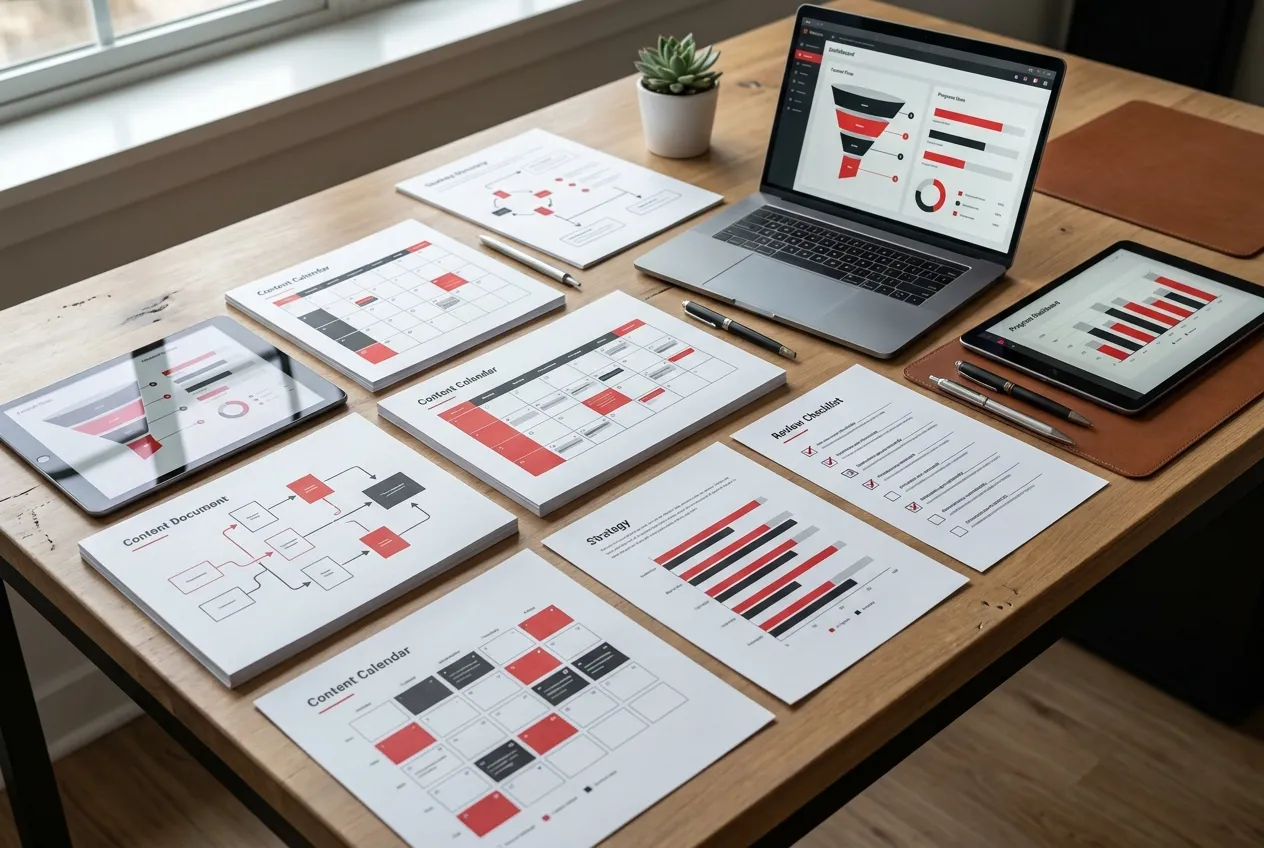
This service delivers a complete funnel plan and build that connects your traffic sources to a structured conversion path. You receive documented strategy, technical setup, and a working funnel system designed for measurable performance.
Deliverables
Funnel Strategy Document
A written plan outlining your offer structure, audience segments, traffic sources, messaging angles, and conversion goals. This includes stage-by-stage breakdowns from awareness to purchase or booking.Customer Journey Map
A visual and written journey map that shows how prospects move from first click to final action. It defines entry points, decision points, objections, follow-up timing, and conversion triggers.Funnel Architecture Blueprint
A structured diagram of your funnel pages, sequences, and automation paths. This includes page order, redirect logic, tagging rules, and CRM triggers.Funnel Design and Build
Full setup inside your funnel platform, including landing pages, opt-in forms, sales pages, checkout pages, thank-you pages, and confirmation steps. Pages are structured for clarity, speed, and usability.Lead Capture System Setup
Form configuration, tagging structure, segmentation rules, and database organization inside your CRM to ensure leads are categorized correctly from day one.Automation Integration
Email sequences, SMS workflows if applicable, internal notifications, and conditional logic built inside your automation platform. Includes testing and validation before launch.Conversion Tracking Configuration
Setup of event tracking, goal tracking, and reporting dashboards inside analytics tools and conversion tracking systems. This ensures accurate attribution for paid traffic and organic sources.Optimization Roadmap (if ongoing)
A monthly testing plan outlining A/B test priorities, messaging adjustments, page refinements, and funnel performance reviews.
For businesses operating in Daytona Beach, funnel structure and messaging can also account for local market conditions when relevant to your offer.
Tools and Access
This service uses:
RockN' Socials CRM
Funnel builders
Automation platforms
Analytics tools
Conversion tracking systems
To complete setup, we require:
Website or funnel platform access
CRM access with admin permissions
Ad account access if traffic is running
Clear offer details including pricing, packages, and positioning
All systems are configured directly inside your accounts so you retain full ownership.
What You’ll Be Able to Review
You will be able to review and approve:
The funnel strategy document before build begins
The full customer journey map
Page wireframes and layout structure
Automation flow diagrams
Tracking setup and event configuration
After launch, you can monitor:
Lead volume and source attribution
Conversion rates by page
Drop-off points in the funnel
Cost per lead and cost per acquisition
CRM tagging and segmentation behavior
If monthly optimization is included, you receive performance summaries and documented test logs showing what was changed and why.
What We Need From You to Start
To begin, we need:
A clear description of your offer and pricing
Access to your CRM and funnel platform
Access to your ad accounts if traffic is active
Brand assets including logo, colors, and messaging guidelines
Existing email content or sales scripts if available
If you are a business serving customers in Daytona Beach, we may also request information about your local audience, service areas, or competitive positioning to refine targeting and messaging.
How We Evaluate and Improve Performance
Performance improvements are never based on guesses. Every funnel strategy and buildout begins with structured analysis using measurable data from multiple systems.
We evaluate how users move from first click to final action, then identify where friction, confusion, or technical gaps reduce results.
Data Sources We Analyze
We review performance data across several connected systems to understand the full customer journey.
From RockN' Socials CRM, we analyze lead quality, sales outcomes, follow-up timelines, and pipeline movement. This helps us determine whether issues are happening at the marketing level or inside the sales process.
Inside funnel builders, we review:
Page-by-page conversion rates
Drop-off points between steps
Form completion rates
Mobile versus desktop behavior
Automation platforms provide insight into email engagement, response timing, and workflow completion rates. If leads enter a sequence but stop engaging, that signals a messaging or timing issue.
Analytics tools and conversion tracking systems confirm traffic sources, behavior flow, event tracking accuracy, and attribution consistency. We verify that tracking is properly configured before drawing conclusions, since inaccurate data often leads to incorrect optimization decisions.
When performing customer journey mapping services, we focus on transition points between stages because that is where performance gaps usually appear.
Example Findings We Often Identify
During analysis, we frequently uncover patterns such as:
Strong ad traffic but low landing page engagement
High opt-in rates but low booked appointments
Leads entering automation but not progressing to sales calls
Duplicate tracking events causing inflated conversion data
Messaging inconsistencies between ads and funnel pages
Each finding is documented with supporting data from at least two systems. For example, if booked calls decline, we compare CRM data, calendar tracking, and funnel step completion rates to confirm where the breakdown occurs.
Resolving these issues improves overall performance because we are addressing structural bottlenecks rather than isolated symptoms.
Example Analysis Scenario
For businesses operating in Daytona Beach, we often see strong local ad engagement but uneven conversion behavior between mobile and desktop users.
In one scenario, traffic was increasing steadily, but appointment bookings were flat. Funnel analytics showed strong landing page engagement, yet conversion tracking systems revealed that form submissions were failing on certain mobile devices.
We confirmed this by comparing:
Device-level behavior in analytics tools
CRM lead entries
Funnel builder submission logs
This cross-platform review allowed us to identify a technical form configuration issue rather than a messaging problem. Fixing the technical barrier restored expected conversion flow without changing the overall strategy.
Real Tool Workflow
Our evaluation process connects tools rather than reviewing them in isolation.
Funnel builders show step-by-step behavioral data
Analytics tools validate traffic quality and user flow
Conversion tracking systems confirm accurate event measurement
RockN' Socials CRM verifies lead quality and revenue outcomes
Automation platforms reveal engagement and follow-through
When these systems are analyzed together, we avoid false assumptions. A drop in conversions might look like a traffic issue, but CRM data may show declining sales follow-up speed instead. Combining signals prevents misdiagnosis.
How Improvements Are Prioritized
After analysis, we rank improvements based on:
Impact on revenue or lead quality
Level of friction removed from the journey
Technical effort required
Speed to implement
We address high-impact structural issues first, such as broken tracking, misaligned messaging, or form failures. Secondary optimizations like layout adjustments or headline refinements are implemented after core conversion paths are stabilized.
This structured approach ensures that funnel strategy decisions are driven by evidence, not assumptions, and that improvements create measurable forward movement rather than cosmetic changes.

Our Process
Strong funnel performance comes from a structured process, not random edits. We follow a repeatable workflow that starts with understanding your current setup, then moves through planning, building, measurement, and ongoing improvements. This keeps decisions grounded in real data and clear customer behavior, so the funnel is easier to manage and improve over time.
Step 1: Initial Assessment
We start by reviewing what you already have, even if it’s messy or incomplete. This includes your website, landing pages, forms, email or SMS messages, and your CRM setup. We look for friction points that prevent people from taking the next step, like confusing page flow, unclear offers, missing follow-up, or broken tracking.
We also review any available performance indicators such as page views, form completion rates, sales or booking volume, and lead quality notes from your team. If you’re running paid traffic, we look at how clicks currently move (or fail to move) through your funnel. For businesses operating in Daytona Beach, we also consider how local buyer behavior (like urgency, seasonality, and service-area expectations) may affect the path from first click to purchase.
Step 2: Strategic Planning
Next, we turn the findings into a clear plan. This is where we define the funnel’s purpose and the job each step needs to do. We outline who the funnel is for, what action we want them to take, and what questions or doubts need to be answered along the way.
We map the flow from entry point to end goal and decide what content and offers belong at each stage. This is also when we set measurement standards so you can tell what “working” means before we build. When appropriate, we use customer journey mapping services thinking to clarify decision points, drop-off risks, and the moments where follow-up matters most.
Step 3: Implementation
With the plan approved, we build and connect the system. This includes creating or updating funnel pages, setting up forms, and connecting everything to your CRM and automation tools. We implement tagging and segmentation rules so leads are organized based on what they did (or didn’t do). We also configure follow-up so prospects receive the right message at the right time, instead of getting dumped into a generic list.
During implementation, we run practical checks: page speed, mobile usability, form delivery, email deliverability basics, and handoffs to your team when a lead becomes ready for contact. Before launch, we do end-to-end testing to confirm the funnel works like a real customer would experience it.
Step 4: Monitoring and Measurement
After launch, we track performance based on the funnel’s key actions. We monitor traffic flow, page-by-page conversion rates, lead quality signals, and where people abandon the process. We also verify tracking accuracy so the numbers match reality. If data looks off, we diagnose whether it’s a tracking issue, a traffic mismatch, or a funnel step that needs clearer messaging.
Step 5: Continuous Refinement
Funnels improve through steady, focused adjustments. We use performance data and real lead feedback to decide what to test next. This may include changes to page order, headlines, form length, follow-up timing, or qualification steps.
Instead of changing many things at once, we prioritize the highest-impact bottlenecks and document what changed and why. Over time, this creates a funnel that is easier to maintain, easier to scale, and more predictable in results.

Pricing
Pricing varies based on the scope of work, technical complexity, and the specific needs of each business. For companies serving customers in Daytona Beach, local market conditions and customer behavior may affect the level of targeting, tracking, and testing required — and that can change the final cost.
Projects typically start around 2000 — suitable for a single landing page, a basic lead capture sequence, or a small campaign for a local business with limited integrations.
Most businesses invest between $5000-$10,000 — common for multi-step conversion paths that include several pages, email nurturing sequences, analytics setup, and moderate third-party integrations for consistent lead flow.
Larger or more complex implementations may range $15000-$50000+ — applies to enterprise-level work with custom development, CRM and payment integrations, advanced automation, multi-channel tracking, and extensive A/B testing across many customer touchpoints.
Common factors that influence final pricing include:
size of the website and total pages that need conversion-focused design
number of services or product lines included in the path
technical complexity such as API integrations, custom scripts, or membership systems
competitiveness of the market and the level of ad spend or targeting needed
level of ongoing support, maintenance, and optimization required after launch
current condition of the website, including cleanup, migration, or performance fixes
Most projects begin with a discovery consultation or site review to define objectives, map the required steps, and set a clear scope. That initial assessment helps ensure businesses only invest in the work that will deliver measurable value.

Next Step
The next step is a consultation to understand your business goals and current situation in detail. This lets us learn about operations and priorities for businesses operating in Daytona Beach and the market you serve.
The conversation helps clarify priorities, scope, timeline, and level of work expected. It also lets everyone align on expectations and the amount of effort likely required.
The purpose of the conversation is to identify practical opportunities that fit your needs and customer base. It will also help determine whether this service is a good fit for your business and goals.
If you would like to explore the service further, you can schedule a consultation.
FAQ'S
Frequently Asked Questions
Quick answers about how we help businesses grow.