
Service
Facebook Ads Instagram Stories In Daytona Beach For Qualified Leads

Facebook ads instagram stories give businesses a direct way to put offers, appointments, and promotions in front of people who are ready to act. For many businesses in Daytona Beach, the problem is not visibility but efficiency. They may be spending on boosted posts, seeing clicks come in, yet struggling to turn that traffic into booked calls or real sales. When campaigns are not structured around clear conversion goals and tracked properly, ad spend gets wasted and growth stalls.
Performance often breaks down long before budget becomes the issue. We regularly see landing pages with slow page speed, weak site architecture, or indexing problems that hurt conversion rates after the click. Too often campaigns are handled like advertising agency social media without clear performance benchmarks. Real growth comes from disciplined testing and targeted social media ads built around buying intent. This becomes even more critical for businesses expanding into multiple locations and trying to control costs while scaling.
RockN' Socials approaches Meta campaigns with structured technical audits and a clear optimization roadmap. We validate tracking, review funnel paths, and document findings inside search visibility reports and performance dashboards so decisions are based on data. We work closely with local service businesses and growing companies that rely on inbound leads, and the rest of this page outlines how we turn ad spend into measurable pipeline growth.
What You Get
You receive a structured ad management system designed to generate consistent leads and measurable growth. Every part of the service is documented, trackable, and built to support long-term customer acquisition for businesses operating in Daytona Beach.
Deliverables
Campaign strategy document outlining offer positioning, funnel structure, budget allocation, and performance benchmarks based on your service model and local market conditions in Daytona Beach.
Audience targeting setup inside Meta Ads Manager, including saved audiences, custom audiences, and lookalike audiences built from website visitors, customer lists, and engagement data to support targeted social media ads.
Ad creative development package with image and story ad designs created using Adobe Photoshop and professional creative design tools, including primary text variations, headlines, call-to-action selections, and placement-specific formatting.
Conversion tracking implementation using conversion tracking platforms and Meta Pixel setup, including event configuration for form submissions, calls, purchases, or booked appointments.
Retargeting campaign setup targeting website visitors, video viewers, and social media engagers with structured sequences designed to move prospects from awareness to inquiry using targeted ads on social media.
Monthly performance report detailing spend, cost per lead, click-through rate, conversion rate, audience performance, creative testing results, and optimization actions taken.
Weekly internal optimization log documenting bid adjustments, creative testing updates, audience refinements, and budget reallocations.
Quarterly strategy review document summarizing trend data, scaling opportunities, creative fatigue analysis, and next-quarter action steps.
Tools and Access
Campaigns are managed through Meta Ads Manager and tracked through integrated conversion tracking platforms. Creative assets are developed using Adobe Photoshop and other professional design tools. Optimization decisions are supported by AI-assisted ad optimization systems and data stored inside the RockN' Socials CRM.
To launch and manage campaigns, we require:
Meta Business Manager access
Facebook page access
Instagram account access
Website access for pixel and event tracking setup
Access is used strictly for campaign management, tracking configuration, and performance analysis.
What You’ll Be Able to Review
You will have visibility into:
Live campaign performance inside Meta Ads Manager
Monthly performance reports with clear cost and lead metrics
Audience performance comparisons
Creative testing results and engagement data
Budget allocation breakdowns
Conversion tracking accuracy and event reporting
You can review ad creatives before launch, monitor spend levels, and see how leads move into your CRM. Reporting focuses on measurable outputs such as cost per result, lead volume, and return on ad spend so you can evaluate the effectiveness of the advertising agency social media strategy.
What We Need From You to Start
To begin, we need:
Administrative access to Meta Business Manager
Access to your Facebook and Instagram accounts
Website login or developer access for tracking setup
A clear description of your service offer and pricing
Any existing brand guidelines or creative assets
Historical campaign data if available
Once access and initial information are provided, we complete tracking setup, build audience structures, and prepare creative assets for approval before launch.
How We Evaluate and Improve Performance
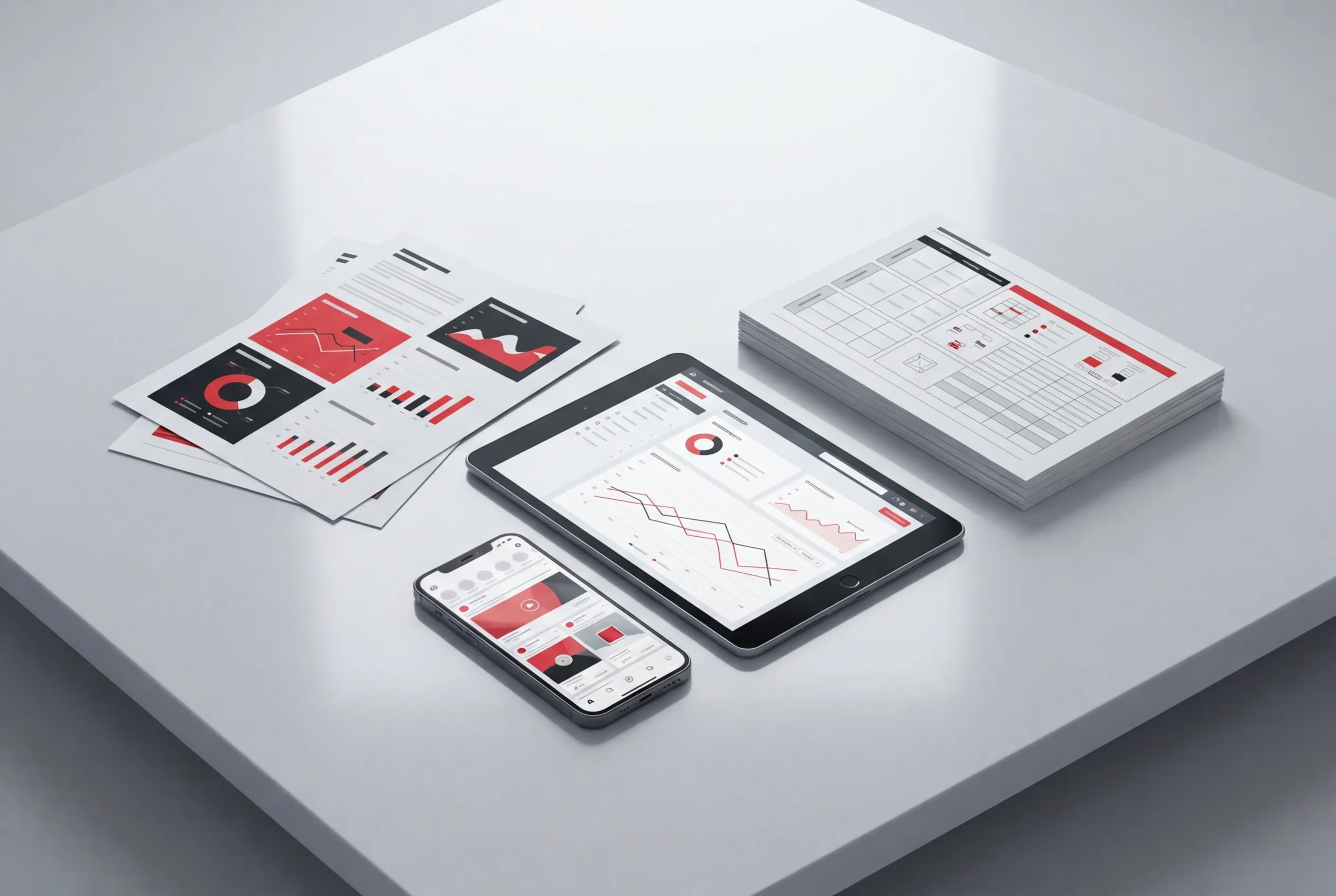
Performance improvements are driven by structured analysis, not guesswork. Every campaign is reviewed using measurable data so we can identify root causes before making changes.
Data Sources We Analyze
We evaluate campaign performance across multiple platforms to understand the full customer journey.
Primary data comes from Meta Ads Manager, where we review:
Click-through rates
Cost per click
Cost per lead
Frequency
Placement performance
Audience breakdowns
These metrics show how well the ads are attracting attention and whether targeted ads on social media are reaching the right users.
Inside conversion tracking platforms, we verify whether clicks are turning into meaningful actions such as form submissions or calls. We compare this with CRM data from RockN' Socials CRM to confirm lead quality, not just volume.
We also analyze:
Creative performance variations using AI-assisted ad optimization systems
Visual clarity and message hierarchy through Adobe Photoshop and creative design tools
Landing page engagement and form completion behavior through landing page optimization tools
By comparing ad-level data with on-site behavior, we can determine whether problems are caused by audience targeting, creative messaging, or conversion friction.
Example Findings We Often Identify
Common issues we uncover include:
Strong impressions but low engagement, indicating creative fatigue or weak messaging
High click volume but low conversions, suggesting landing page friction
Rising costs tied to audience saturation or limited targeting depth
Inconsistent performance between placements such as feed versus facebook ads instagram stories
We document these findings in structured reports that separate traffic problems from conversion problems. This prevents misdiagnosing a landing page issue as an audience issue, or vice versa.
For businesses investing in targeted social media ads, this clarity is critical. It ensures budget shifts are based on evidence rather than assumptions.
Example Analysis Scenario
For businesses operating in Daytona Beach, we often see seasonal shifts in engagement tied to tourism cycles. In one scenario, a local service company experienced stable click-through rates but declining lead quality.
Meta Ads Manager showed consistent traffic costs, but conversion tracking platforms revealed longer form completion times. CRM data confirmed that many submissions were incomplete or unqualified.
By comparing these data sources, we identified that the issue was not audience targeting but form complexity on mobile devices. Landing page optimization tools confirmed that most traffic was mobile. Adjusting form fields and layout improved conversion signals without increasing ad spend.
This type of cross-platform comparison prevents unnecessary targeting changes when the real issue is post-click behavior.
Real Tool Workflow
Our evaluation process connects each tool to a specific decision point.
Meta Ads Manager identifies visibility and engagement trends.
Conversion tracking platforms confirm action-based results.
RockN' Socials CRM verifies lead quality.
AI-assisted ad optimization systems highlight creative fatigue or scaling opportunities.
Landing page optimization tools detect friction after the click.
By layering these signals together, we avoid optimizing in isolation. A strong ad with weak landing performance requires a different solution than weak engagement caused by audience mismatch.
How Improvements Are Prioritized
Once issues are identified, we rank improvements based on potential impact and implementation effort.
We prioritize:
Fixes that directly affect conversion rates
Adjustments that reduce wasted ad spend
Creative updates that address measurable engagement drops
Audience refinements that expand scalable reach
High-impact, low-complexity improvements are implemented first during weekly optimization cycles. Larger strategic shifts are reviewed during monthly reporting and quarterly planning sessions.
This structured prioritization ensures that every change supports consistent customer acquisition rather than short-term metric fluctuations.

Our Process
Strong Meta campaign results come from a repeatable system, not random changes. We follow a clear workflow so every decision is based on real data, clean tracking, and what the audience is doing across placements like facebook ads instagram stories.
Step 1: Initial Assessment
We start by reviewing your current digital setup to understand what success should look like and what may block it. This includes a quick audit of your website and any landing pages people will reach from ads. We check page speed, mobile layout, form or booking flow, and whether the offer is easy to understand in the first few seconds.
Next, we review your existing Meta presence. That means your Facebook page, Instagram profile, past campaigns (if any), and account structure inside Meta Ads Manager. We also confirm that key assets are available (business info, creative examples, and any restrictions tied to your industry).
For businesses operating in Daytona Beach, we also look at practical audience behavior signals—like whether most customers act fast on mobile, whether calls convert better than forms, and what times of day tend to produce inquiries.
Step 2: Strategic Planning
Using what we learn, we map out a simple plan that connects the offer, audience, and funnel. We define the main conversion action (lead form, call, purchase, or appointment request) and choose a campaign structure that matches it.
We outline the targeting approach and how we will test it. This includes identifying core audience groups, retargeting pools, and what “good performance” should look like early on versus after optimization. If your business has multiple services, we decide which to prioritize first so spend is focused and results are easier to measure.
We also plan the creative testing schedule: what messages to test, what angles to avoid, and how we’ll keep tests clean so the data is trustworthy.
Step 3: Implementation
Once the plan is approved, we build the campaigns and connect the supporting systems. We implement tracking, confirm events are firing correctly, and verify that leads or purchases can be traced back to specific campaigns and ads.
Then we create and format ads for different placements and devices. We build multiple versions so we can test one variable at a time (such as the hook, headline, or call-to-action). We also set brand and compliance checks to reduce disapprovals and keep delivery stable.
Finally, we confirm your lead handling process is ready—whether that’s notifications, CRM routing, or follow-up steps—so responses happen fast after someone converts.
Step 4: Monitoring and Measurement
After launch, we monitor performance daily in the early phase to catch tracking issues, delivery problems, or weak creative quickly. We track core indicators like cost per result, click-through rate, conversion rate, and lead quality signals.
We also review how each audience and placement performs, then compare results across creative versions. If we’re running targeted social media ads, we verify the targeting is actually reaching the right people and not drifting into low-quality traffic.
Step 5: Continuous Refinement
Optimization is an ongoing loop: observe, decide, test, and document. We shift budget toward what performs, pause what doesn’t, and refresh creative before fatigue becomes a problem.
Over time, we refine targeting, improve landing page flow when needed, and tighten conversion tracking so reporting stays accurate. For companies serving customers in Daytona Beach, we also adjust messaging based on seasonality and local demand patterns to keep performance steady as the market changes.
Pricing
Project pricing varies with scope, technical complexity, and the specific goals of your business. Companies serving customers in Daytona Beach should expect prices to reflect local competition and the level of targeting and tracking required.
Projects typically start around $750 Setup ($1,000/Month), Percent of Ad Spend: 10% (After $10,000 Ad Spend — commonly applies to small businesses testing paid social with one or two campaigns and basic conversion tracking.
Most businesses invest between $750 Setup ($1,000/Month), Percent of Ad Spend: 10% (After $10,000 Ad Spend — this range fits established local businesses running ongoing campaigns across multiple audiences with regular creative testing and monthly reporting.
Larger or more complex implementations may range $1000+ Setup ($1,500+/Month), Percent of Ad Spend: 10-15% (After $10,000 Ad Spend — used for multi-location operations, advanced tracking setups, or campaigns that require extensive creative production and frequent optimization.
Common factors that influence final pricing include:
size of the website and the number of pages or services that need tracking or landing pages
technical complexity, such as custom funnels, API integrations, or advanced conversion events
competitiveness of the market, which affects ad volume and testing needs
level of ongoing support required for campaign management, reporting, and creative refreshes
current condition of the website, including page speed, mobile readiness, and conversion elements
Most engagements begin with a consultation or account review to define the proper scope. That initial review helps ensure you only invest in the work that will provide measurable value for your business.
Next Step
The next step is a consultation to understand your business goals and current situation. We tailor the conversation to businesses operating in Daytona Beach so we can see how the service might fit your market.
That conversation helps clarify priorities, scope, timeline, and the expected level of work. It also makes it easier to align efforts with what matters most to your organization.
The purpose is to identify practical opportunities you can act on right away. It also helps determine whether the service is a good fit for your needs.
If you would like to explore the service further, you can schedule a consultation.
FAQ'S
Frequently Asked Questions
Quick answers about how we help businesses grow.