
Service
Outdoor Advertising Billboard in Daytona Beach for Increased Local Visibility And Leads
Outdoor advertising billboard campaigns give businesses a way to dominate attention in high-traffic areas and stay visible long after a digital ad is skipped. For many businesses in Daytona Beach, online traffic alone does not convert into consistent leads, especially when competitors are bidding aggressively on paid search or crowding local results. A strategically placed billboard keeps your brand in front of commuters, tourists, and local buyers every single day, reinforcing credibility and driving direct calls, website visits, and walk-in inquiries.
Many billboard advertising companies focus only on creative design without aligning placement to audience behavior, traffic flow, or local buying intent. Effective advertising on a billboard requires analyzing traffic patterns, visibility angles, impression frequency, and proximity to key commercial zones. When companies are expanding into multiple locations or managing dozens of service pages online, a well-placed billboard for advertising can support search campaigns by increasing branded searches and direct traffic, which we monitor inside performance dashboards to measure lift and visibility trends.
At RockN' Socials, we approach billboard strategy with the same structured technical audits and data-driven planning we use in search campaigns. We review placement data, audience demographics, and competitive positioning, then document performance insights in clear reporting dashboards that connect offline visibility to inbound lead activity. We work closely with local service businesses and growing companies that rely on steady inbound leads, and the rest of this page explains how our planning, design, and placement process turns visibility into measurable growth.
What You Get
When you invest in billboard visibility, you receive a fully managed campaign built around clear location strategy, professional creative, and measurable performance tracking. Every step is documented so you know where your message appears, how it is managed, and what results are being monitored.
Deliverables
Billboard Design Package
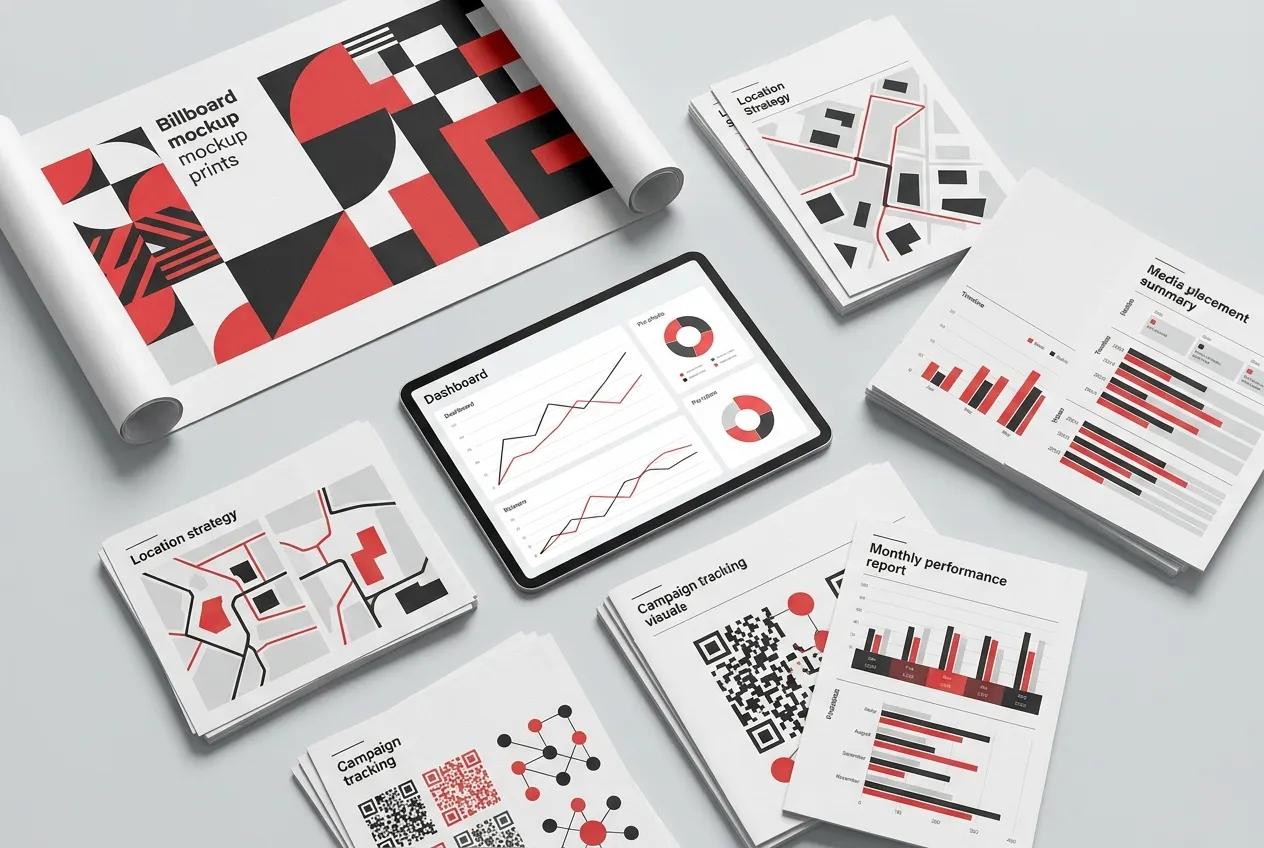
A completed billboard for advertising including layout mockups, final artwork files, sizing based on board specifications, and print-ready exports created in Photoshop and professional design software. You will review and approve concepts before production.Location Selection Strategy Document
A written plan outlining recommended board locations based on traffic counts, audience flow, commuting patterns, and visibility angles. This includes a summary of why each placement supports your goals and how it fits businesses operating in Daytona Beach.Media Placement Management
Coordination with billboard advertising companies for availability checks, contract review, scheduling, artwork submission, and production timelines. You receive a placement confirmation summary with board IDs, display dates, and campaign duration.Campaign Tracking Setup
Setup of tracking mechanisms such as custom URLs, call tracking numbers, QR codes, or offer-based redemption codes tied to advertising on a billboard. This includes documentation explaining how each tracking method connects to performance reporting.Monthly Performance Reporting
A structured report delivered each month outlining campaign dates, board status, traffic estimates provided by media partners, tracked calls or visits, and observations for optimization.Campaign-Level Reviews
Scheduled review sessions to assess creative clarity, placement effectiveness, and budget allocation for future rotations or renewals.
Tools and Access
Campaign planning and communication are managed inside RockN' Socials CRM, where timelines, approvals, and documents are stored.
Design software and Photoshop are used to create compliant billboard artwork based on exact media specifications.
Media buying platforms and direct vendor portals are used to secure placements and manage contracts.
Location analysis tools help evaluate traffic patterns, road visibility, and audience density.
Analytics systems connect call tracking, landing pages, or QR scans to measurable outcomes.
To begin, we will need access to brand assets such as logos, color guidelines, and image libraries. If tracking integrations are required, we may request website access or coordination with your web provider.
What You’ll Be Able to Review
You will be able to review and approve:
Initial design concepts and final artwork files
A written location strategy with board details
Placement confirmations and flight schedules
Monthly performance reports
Tracking summaries tied to campaign-specific URLs or phone numbers
All documentation is stored for reference so you can evaluate cost, duration, and performance before renewing or expanding placements.
What We Need From You to Start
To launch your campaign, we need:
Brand assets including logo files and brand guidelines
Target location details such as service radius or priority corridors
Offer messaging or primary call to action
Budget range and preferred campaign duration
With this information, we can build a structured plan that aligns your message with high-visibility placements and measurable outcomes for companies serving customers in Daytona Beach.
How We Evaluate and Improve Performance
Improving results from billboard campaigns starts with structured analysis, not assumptions. Every recommendation is based on measurable signals gathered from placement data, audience behavior, and campaign tracking systems.
Data Sources We Analyze
To evaluate performance, we review multiple data inputs rather than relying on visibility alone.
From our media buying platforms, we analyze:
Traffic counts and impression estimates
Placement rotation schedules
Audience demographics tied to specific boards
Using location analysis tools, we assess traffic flow patterns, directionality, proximity to commercial centers, and competitive board density. This helps us determine whether the board is positioned for commuter exposure, tourist traffic, or local repeat visibility.
Through RockN' Socials CRM and integrated analytics systems, we review:
Increases in direct traffic
Branded search volume shifts
Call tracking data
Form submissions during active flight periods
On the creative side, we evaluate design effectiveness using professional design software and Photoshop. We assess readability at distance, contrast ratios, font scaling, and message hierarchy. A billboard for advertising must communicate in seconds, so design clarity is measured objectively.
When businesses are advertising on a billboard, these combined signals help us determine whether visibility is translating into measurable engagement.
Example Findings We Often Identify
During evaluation, we frequently uncover patterns such as:
High traffic count locations with weak engagement signals
Strong creative design but poor board positioning relative to traffic direction
Good placement but message overload that reduces readability
Performance spikes during certain weeks due to local events
These findings are documented in campaign-level reviews. We correlate exposure data with CRM and analytics trends to confirm whether changes in traffic or lead volume align with active billboard flights.
Resolving these issues often involves refining creative messaging, adjusting placement selection, or reallocating budget toward higher-performing boards.
Example Analysis Scenario
For businesses operating in Daytona Beach, we often see seasonal shifts due to tourism and event-driven traffic. A board that performs well during peak visitor months may underperform during slower local periods.
In one common scenario, impression data shows strong visibility, but CRM data reveals minimal lift in branded searches. We compare:
Traffic direction and board angle
Competitive billboard density nearby
Timing of flight relative to local events
Website and call activity during the same timeframe
If visibility is high but response is low, we investigate whether the creative lacks a clear call to action or if the audience segment does not match the business’s core market.
This layered comparison prevents misdiagnosing placement issues as creative problems, or vice versa.
Real Tool Workflow
Our evaluation workflow connects multiple systems to avoid isolated conclusions.
Media buying platforms provide exposure and placement data
Location analysis tools validate audience alignment
Analytics systems measure digital response trends
RockN' Socials CRM tracks lead quality and volume
Design software and Photoshop assess creative clarity
By combining these inputs, we confirm whether performance issues stem from placement strategy, creative execution, or audience mismatch. This integrated approach reflects how experienced billboard advertising companies evaluate campaigns beyond surface metrics.
How Improvements Are Prioritized
Once issues are identified, we rank improvements based on:
Potential impact on lead volume or brand visibility
Ease and speed of implementation
Cost efficiency relative to media spend
High-impact changes, such as relocating a board with poor directional visibility or simplifying an overcrowded design, are prioritized first. Lower-impact refinements, like minor creative adjustments, follow in later optimization cycles.
Monthly performance reporting and campaign-level reviews ensure that every outdoor advertising billboard strategy evolves based on measurable evidence, not assumptions.

Our Process
Strong results come from a structured workflow, not random creative changes or last-minute placement decisions. Our billboard campaigns follow a repeatable process that connects your message, your audience, and the real conditions on the road so you can run an outdoor advertising billboard with clarity and control.
Step 1: Initial Assessment
We start by learning what your business needs the billboard to do. That includes reviewing your current website and online presence to understand the “next step” a viewer will take after seeing your message. We check basics like page clarity, mobile usability, and whether the main offer is easy to understand fast.
We also gather context on your customers and buying cycle. A billboard works differently for a restaurant than for a home service company, so we document what a qualified lead looks like, what questions people ask before buying, and what proof they need before they call or visit.
Step 2: Strategic Planning
Next, we turn what we learned into a simple plan for messaging and placement. This is where we define the campaign goal (awareness, lead generation, event traffic, or store visits) and decide what the billboard should communicate in seconds.
We plan around how people actually move through the area. For companies serving customers in Daytona Beach, that often means thinking about commuter timing, seasonal traffic swings, and which corridors produce consistent visibility versus short spikes. From there, we set the creative direction (headline, supporting line, brand cues, and call-to-action) and build a timeline that matches media availability and business priorities.
Step 3: Implementation
Implementation covers both creative production and media coordination. On the design side, we create concept options, then refine one direction into final artwork based on board specs. We prioritize legibility, contrast, and message hierarchy so the design reads quickly at speed and at distance.
On the placement side, we coordinate with vendors, request availability, confirm specifications, and manage deadlines for file delivery and posting. If the campaign includes a landing page or phone tracking, we align those supporting pieces with the billboard message so the experience is consistent from first impression to follow-through.
Step 4: Monitoring and Measurement
Once the boards are live, we confirm display status and begin measurement. We track response signals tied to the campaign, such as calls, visits to a specific page, or scanned codes. We also monitor practical factors that can affect results, like timing, message clarity, and whether the viewer action is simple enough to complete quickly.
This step matters because it separates “running ads” from learning what is working. Even when brand visibility is the main goal, tracking helps you see patterns and make smarter decisions on what to repeat.
Step 5: Continuous Refinement
Billboards improve through controlled changes, not constant churn. Over time, we review what the data and real-world feedback suggest, then adjust one variable at a time—message, offer, board rotation timing, or supporting page flow.
If the goal is lead volume, we focus on removing friction in the response path. If the goal is brand authority, we focus on consistency and repetition. This ongoing refinement keeps advertising on a billboard aligned with what people notice, remember, and act on.
Pricing
Costs vary based on scope, technical complexity, and the goals of your campaign. For businesses operating in Daytona Beach, local traffic patterns and site availability can affect placement and run length, so final pricing is scoped to each project.
Projects typically start around $1,500–$3,000 (design + basic placement) — applies to single-site creative and short-term placements for small businesses or local promotions.
Most businesses invest between $3,000–$10,000/month (placement + management + 10% ad spend) — common for sustained campaigns, regular rotation on several locations, and ongoing creative refreshes for regional brands.
Larger or more complex implementations may range $10,000–$50,000+/month (multi-location domination campaigns) — used by multi-location companies or intensive market-share pushes that require coordinated buys and advanced reporting.
Common factors that influence final pricing include:
size of the website — larger online footprints often need broader messaging and more consistent cross-channel creative, which can increase production and coordination costs.
number of pages or services involved — campaigns covering many service lines or product categories require more copy variants and creative versions.
technical complexity — custom artwork, motion elements, or integrated tracking can add design and production time.
competitiveness of the market — higher demand for premium outdoor sites in a market increases placement costs and frequency needed to stand out.
level of ongoing support required — monthly management, reporting, creative refreshes, and coordination with vendors affect recurring fees.
current condition of the website — if web landing pages need updates to convert outdoor traffic, that work is scoped and priced separately.
Most projects begin with a consultation and creative review to define the exact scope so investments align with measurable objectives and only fund the work that delivers real value.

Next Step
The next step is a consultation to understand your business goals and current situation. We focus on listening to where you want the brand to go and the context you're operating in.
This conversation helps clarify priorities, scope, timeline, and level of work. It also helps ensure everyone understands the likely scope and approach.
The purpose of the conversation is to identify practical opportunities and determine whether the service is a good fit. For businesses operating in Daytona Beach, this discussion can reveal local factors that affect visibility and reach.
If you would like to explore the service further, you can schedule a consultation.
FAQ'S
Frequently Asked Questions
Quick answers about how we help businesses grow.